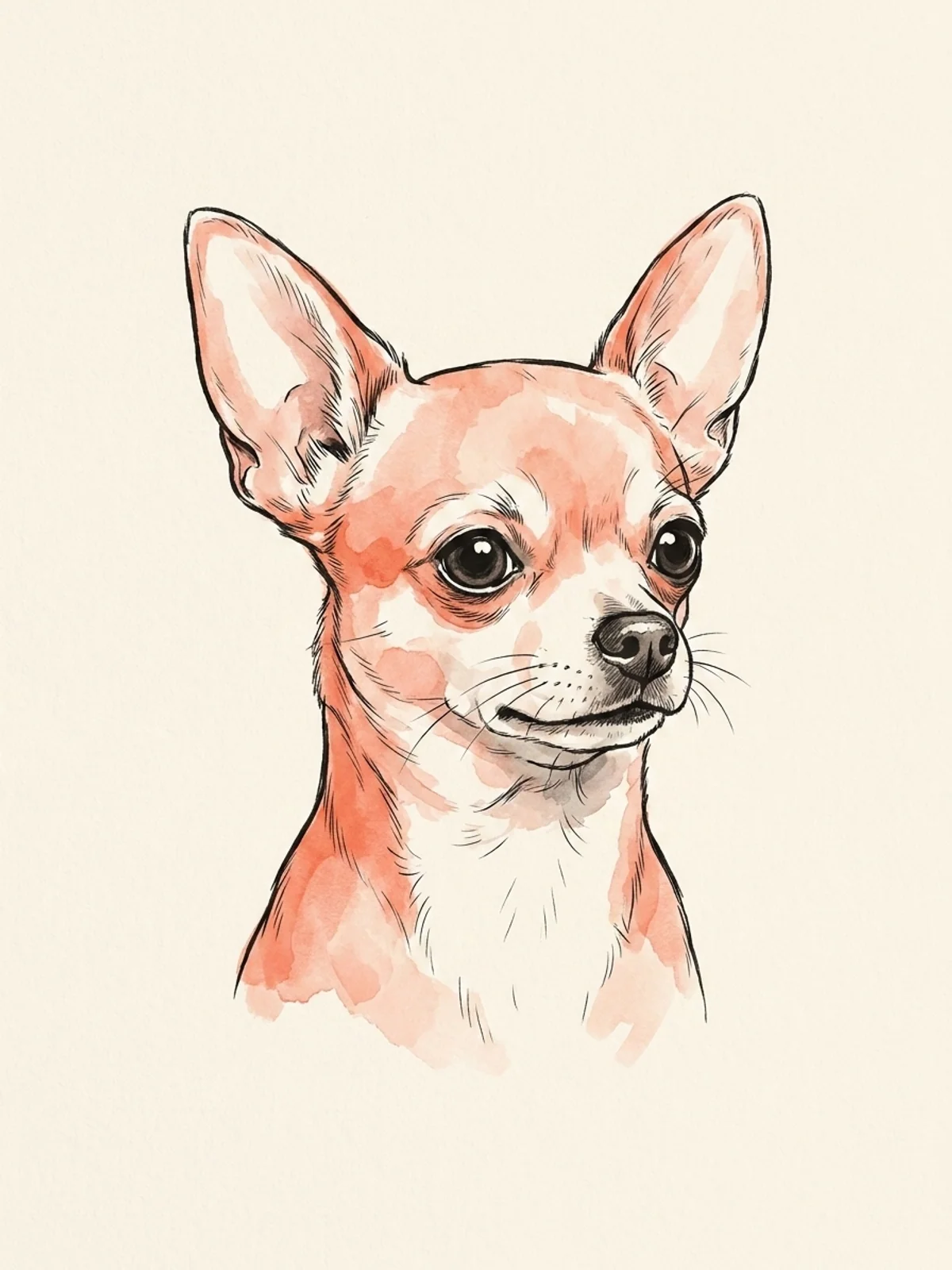
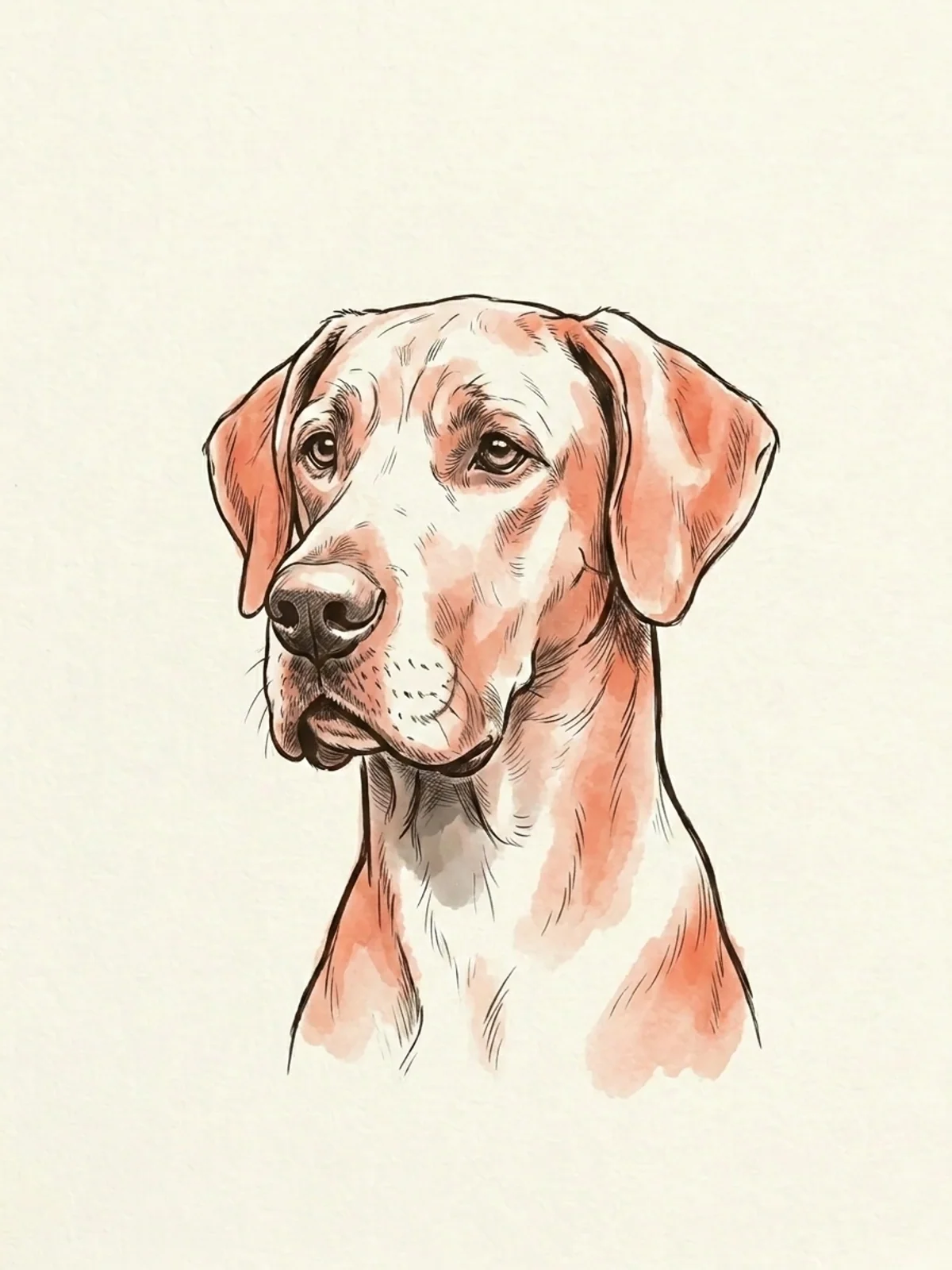
It is one of the strange truths of dogs: a Chihuahua often outlives a Great Dane by nearly a decade. Across most of the animal world, bigger species live longer (elephants outlast mice by a wide margin). But within dogs, the rule flips.
Key facts
- A Chihuahua typically lives 14 to 16 years; a Great Dane typically lives 7 to 10, nearly double the lifespan in the same species
- The Kraus 2013 study in The American Naturalist found each extra 2 kg of body mass costs a dog roughly a month of life
- Large dogs do not start aging later, they age faster: the same study tied bigger size to a higher rate of aging
- Body size is the single strongest predictor of a dog’s lifespan, per a 584,734-dog UK study in Scientific Reports
The size paradox runs backwards in dogs
Compare two species and the bigger one usually lives longer. Compare two dog breeds and the smaller one usually wins.
Across the animal kingdom, body size and lifespan move together. Elephants live for decades while mice live for a year or two, and the pattern holds for most mammals. Inside the dog species the relationship reverses, as National Geographic put it: we see the opposite with dog breeds. Body size is “a better predictor of a short life among pet dogs than any other statistic.”
The numbers behind that claim are now very large. A 2024 analysis of 584,734 UK dogs across 155 breeds, published in Scientific Reports, concluded that “small body size is generally associated with greater longevity” and that size is the greatest single predictor of how long a breed tends to live. This is a pattern across the whole species, not a quirk of a few breeds.
The same UK study put hard edges on the spread. The shortest-lived breed in the data was the Caucasian Shepherd, a giant guardian breed, at about 5.4 years. The longest-lived was the Lancashire Heeler, a small herding dog, at about 15.4 years. That is a gap of roughly ten years between two healthy purebred dogs, and the main thing separating them is how big they grow. Large males in the study reached death about 1.28 times faster than the longest-lived small females, so the size effect shows up as a difference in pace, not just a difference in final age.
The contrast with other species is what makes this so odd. Bigger animals normally get more years, because a larger body usually comes with a slower metabolism and a slower life. Dogs break that rule because the size differences inside the species were created by humans in a few centuries of breeding, far too fast for the usual evolutionary trade-offs to settle into place. A Chihuahua and a Great Dane are the same species pushed to opposite extremes, and their bodies pay for that difference in years.
The Kraus study put a number on it
The clearest measurement comes from Cornelia Kraus and colleagues. Each extra 2 kg of body mass costs a dog about a month of expected life.
Their 2013 paper, The size-life span trade-off decomposed: why large dogs die young, analysed roughly 56,000 dogs across 74 breeds in The American Naturalist. The headline figure, reported in coverage such as the Animal Health Foundation summary, is that an increase of about 2 kg (4.4 lb) in body mass lowers life expectancy by roughly one month.
The more important finding is why. The Kraus team broke the size penalty into two possible parts: dogs could die young because they start aging earlier, or because they age faster once they start. The data pointed clearly at the second. They found “a strong positive relationship between size and aging rate,” and no clean link between size and the age when senescence begins.
So a big dog ages faster from the start rather than simply running out of road sooner. It moves through its life stages on a quicker clock, and the years that look identical on a calendar are not identical inside the body. A four-year-old Great Dane has already spent more of its biological budget than a four-year-old terrier, even though both have lived the same number of summers. That accelerated aging, not a delayed finish line, is what shortens a giant breed’s life, and it is the reason a single multiply-by-seven rule cannot work for every dog.
Fast growth seems to set the pace
The leading mechanism is growth speed. A puppy that has to reach 50 kg in a year is building tissue at a furious rate, and that rate appears to carry a cost.
A Great Dane goes from a one-kilogram newborn to a fifty-kilogram adult in about twelve months. A Chihuahua puppy gains a kilogram or two over the same year. That gap means the Dane is dividing and replacing cells at a furious rate while the Chihuahua coasts, and that rate appears to carry a cost.
Work by Kate Greer and colleagues, published in the journal Age, found that heavier dogs carry higher levels of the growth hormone IGF-1, that IGF-1 falls as a dog gets older, and that the breeds with the most of it tend to have the shortest lives. The authors point to “rapid and prolonged cell turnover” during fast growth as the link between large size, high IGF-1, and a shorter life. The same hormone that builds a big body quickly seems to age it quickly too. Small dogs grow far less, far more gently, carry less IGF-1, and seem to pay a smaller price for it.
The biology here is still being mapped, and not every piece points the same way. A 2020 study by Ana Jimenez and Cynthia Downs in the American Journal of Physiology found that small breeds actually carry higher circulating oxidative damage than large breeds despite living longer, which tells us lifespan is not a simple matter of metabolic wear. What does hold up across studies is the top-line pattern: faster growth and larger size travel with faster aging. Large dogs also reach age-related illness sooner, with cancer, joint disease, and heart problems all tending to arrive earlier in big breeds. You can see the breed-level shape of this in the longest-living dog breeds and the shortest-living dog breeds, which sort almost neatly by size.
What this means for your dog
This is exactly why a dog age calculator has to ask about size. “Six years old” means something completely different for a Chihuahua than for a Great Dane.
A Chihuahua typically lives 14 to 16 years and a Great Dane typically lives 7 to 10. A medium dog like a Beagle sits in between, around 10 to 15 years, near the roughly 11-year all-breed average. The size pattern is why tailculator uses four size-class curves rather than one. After age two, a small dog adds about 4 human years per dog-year, a medium dog about 5, a large dog about 6, and a giant breed about 7.5. A six-year-old Great Dane is well into middle age while a six-year-old Chihuahua is barely an adult, and the calculator builds that gap straight into the math.
Knowing where your dog truly sits in its life helps you care for it well. A giant breed needs you thinking about senior care years earlier than a small breed does, so the screening and joint support that a Chihuahua can wait on should start sooner for a Dane. The accelerated-aging finding from Kraus is the practical reason for this. If your large dog is aging on a faster clock, the bloodwork, weight checks, and early cancer screening that catch problems in time need to begin earlier in calendar years, not at some fixed birthday that works for every breed.
None of this means a big dog is a worse choice or a fragile one. It means the timeline is shorter and front-loaded, so the habits that protect lifespan matter more and matter sooner. Keeping a large breed lean through its growth year, in particular, eases the joint and metabolic load that size already imposes. If you want to compare across the whole range, the breed library lists typical size and lifespan for every breed on the site. Every year counts, and the first step is knowing how many your dog is likely to have.
See your dog’s real age with the calculator, which uses your dog’s size class to give you a number that is actually true for your dog.