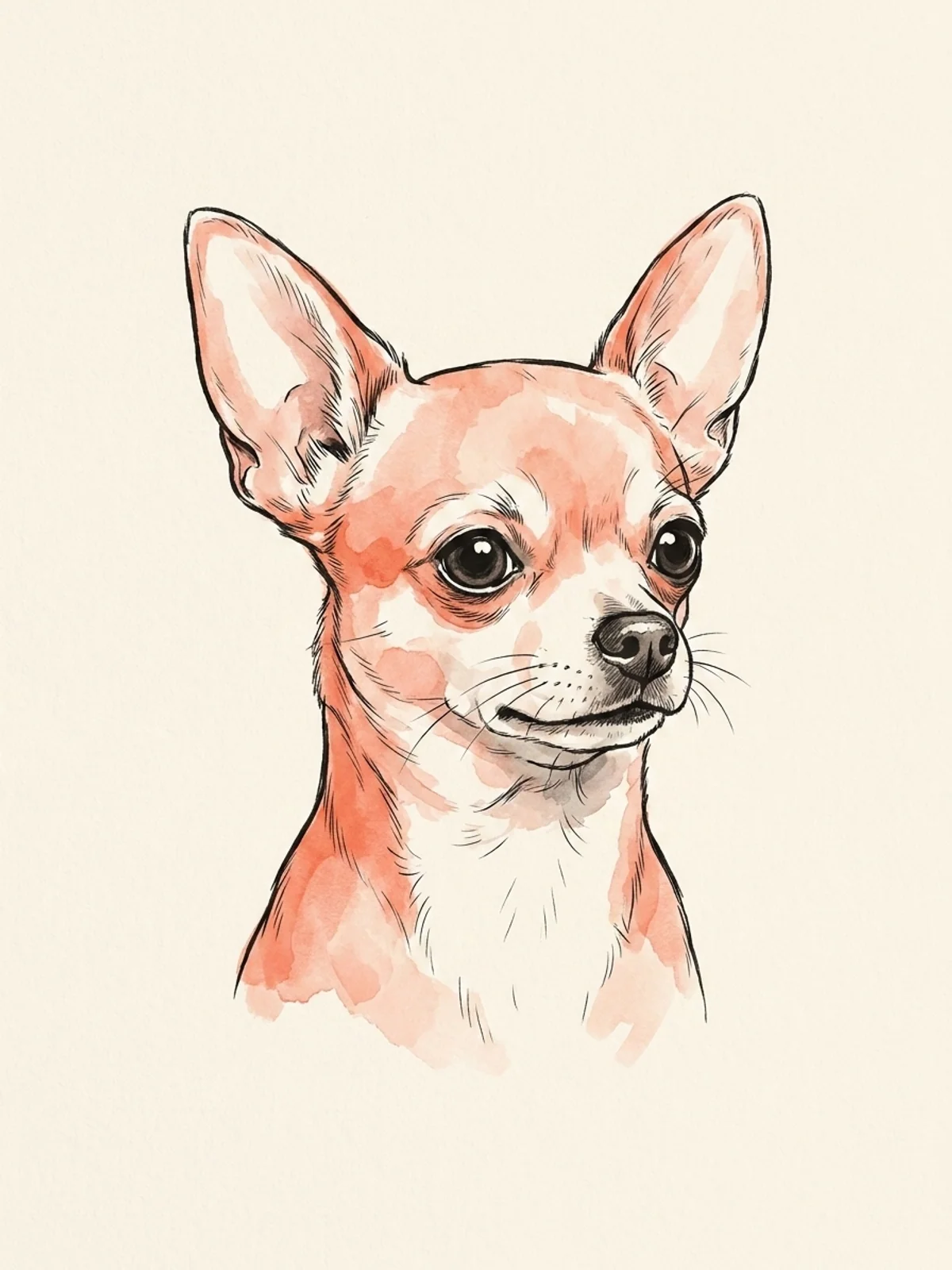
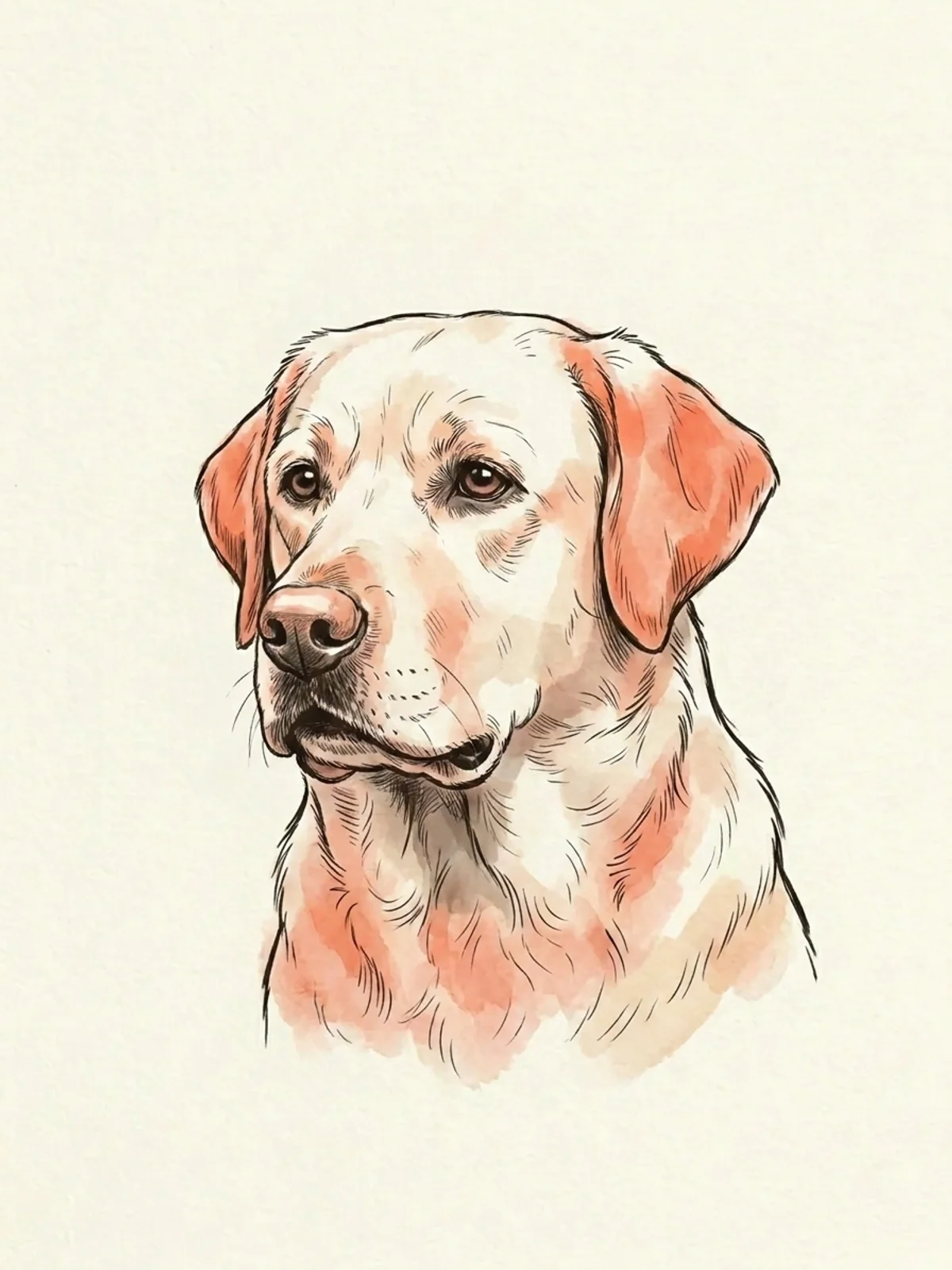
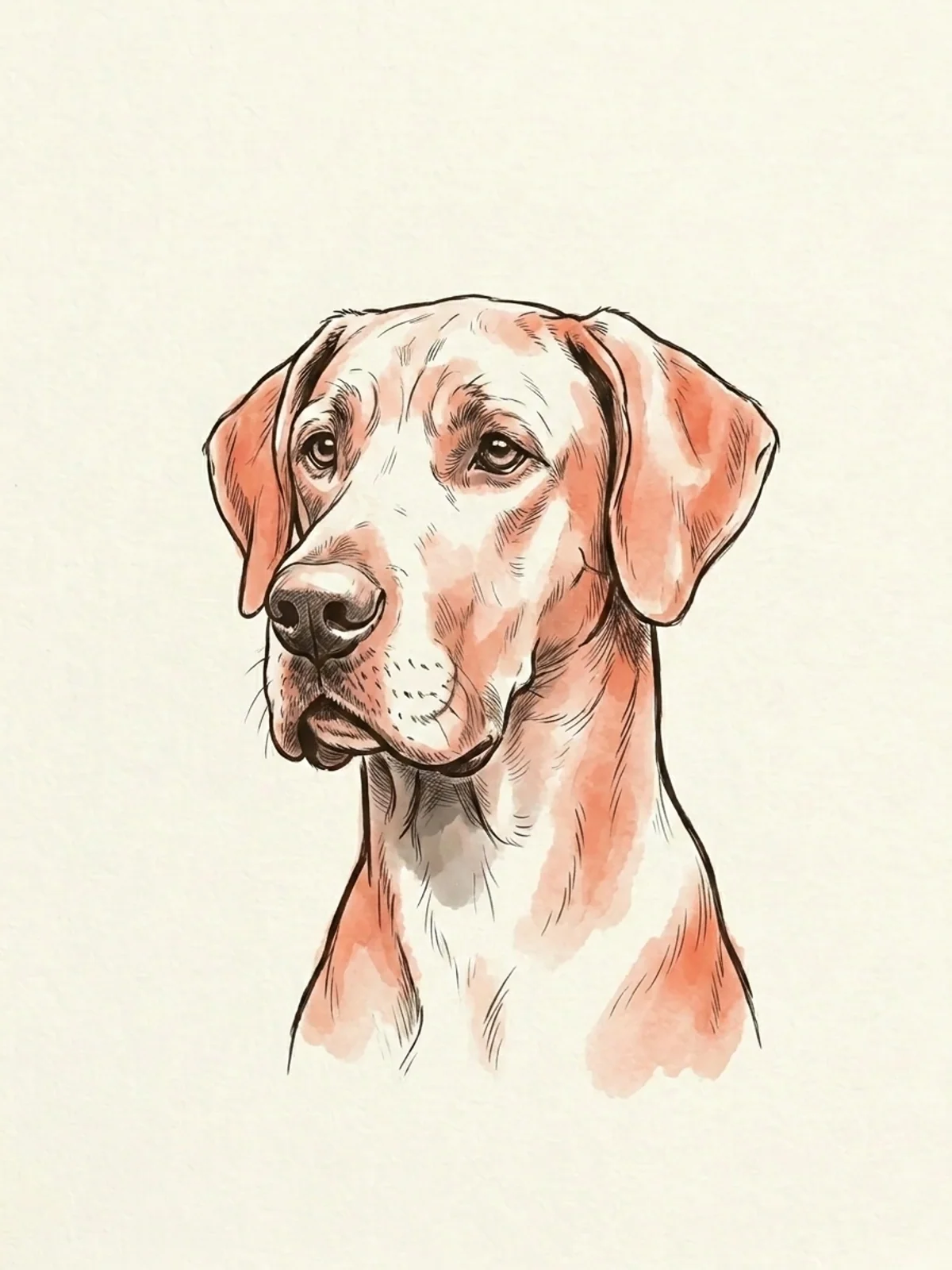
Multiply your dog’s age by seven and you get a number that is almost certainly wrong. The seven-to-one rule has been debunked for decades, but it survives because it is short and easy to remember. The real conversion depends on two things: how old your dog is, and how big she will get. A one-year-old Chihuahua and a one-year-old Great Dane are not the same age in human terms, and neither one is seven.
Key facts
- First year of life equals roughly 15 human years; year two adds about 9 more (near 24).
- After year two, aging diverges by size: small breeds ~4, medium ~5, large ~6, giant ~7 human years per dog year.
- The 2019 Ideker UC San Diego study (Cell Systems) gives human_age = 16 × ln(dog_age) + 31, built on 104 Labradors.
- Body size accounts for more variance in canine aging than any other single factor (Dog Aging Project).
Why the seven-times rule is wrong
The math falls apart in the first year. A one-year-old dog has finished most of her growth, is sexually mature, and behaves more like a fifteen-year-old human than a seven-year-old child. By age two she is closer to a young adult of about twenty-four. So the early years are front-loaded, not flat.
Then dogs split by size. Small breeds keep aging slowly after the second year. Giant breeds accelerate. A Great Dane is geriatric at seven; a Chihuahua at seven is barely middle-aged. A single multiplier cannot describe both of those animals, which is the core problem with the old rule and the reason small dogs live so much longer than big ones.
The actual conversion, by size and age
Here is the working formula most veterinarians use, after the first two years are accounted for separately.
Year one of a dog’s life is roughly fifteen human years. Year two adds about nine more, putting a two-year-old dog near twenty-four. After that, each additional dog year is worth a different number of human years depending on the size class:
- Small breeds under 20 pounds (Chihuahua, Yorkshire Terrier, Pomeranian): about four human years per dog year.
- Medium breeds, 20 to 50 pounds (Beagle, Cocker Spaniel, Border Collie): about five human years per dog year.
- Large breeds, 50 to 90 pounds (Labrador Retriever, German Shepherd, Golden Retriever): about six human years per dog year.
- Giant breeds over 90 pounds (Great Dane, Mastiff, Bernese Mountain Dog): about seven human years per dog year, sometimes more.
So a five-year-old Yorkie is roughly 24 + (3 × 4) = 36 human years. A five-year-old Lab is 24 + (3 × 6) = 42. A five-year-old Great Dane is already pushing 45 and heading into the years when his breed is considered senior. Size is the variable the old rule ignored.
What the science says
The most-cited recent work is a 2019 study from Tina Wang, Trey Ideker, and colleagues at UC San Diego, published in Cell Systems (Wang et al., “Quantitative Translation of Dog-to-Human Aging by Conserved Remodeling of the DNA Methylome,” PMID 32619543). They sampled DNA methylation in 104 Labrador Retrievers and matched the pattern against human epigenetic data. The conversion they landed on is logarithmic, not linear:
human_age = 16 × ln(dog_age) + 31
Run that for a one-year-old dog and you get 31 human years, which is too high for most breeds. Run it for a twelve-year-old Lab and you get about 71, which lines up with what vets see in practice. The Ideker formula is most accurate for medium to large breeds in the middle and later years, and it confirms the broad shape of aging: very fast early, slower later, and never a flat seven-to-one.
The American Veterinary Medical Association uses a simpler three-phase model on its pet care pages: puppy, adult, and senior. The AKC and most veterinary nutrition references break the adult phase into mature adult and senior to track how nutritional needs shift with age. You can read more about how those phases map onto specific years in our guide to dog life stages.
One more nuance worth knowing. The Ideker logarithm was built on Labradors, so it tracks medium-to-large breeds best. For toy breeds the curve runs flatter, and for giant breeds it runs steeper. Researchers at the Dog Aging Project, an ongoing longitudinal study of more than thirty thousand pet dogs in the United States, have published preliminary work suggesting body size accounts for more of the variance in canine aging than any other single factor, including breed group or coat color. That finding is exactly why the calculator on this site asks for your dog’s breed before it gives you a number.
Worked examples
A seven-year-old Labrador Retriever, large breed, lands around 24 + (5 × 6) = 54 human years. The Ideker formula gives about 62 for the same dog. Most vets would call her a healthy older adult, with senior screening starting soon. The seven-times rule would have called her 49, which is younger than her body actually is and the kind of error that leads owners to skip the bloodwork their dog already needs.
A seven-year-old Chihuahua, small breed, lands around 24 + (5 × 4) = 44 human years. She is middle-aged and, with reasonable care, has another seven or eight good years ahead of her. The old rule would have called her 49 too, which is both wrong and unhelpful, because it lumps her in with breeds that age twice as fast and obscures the long, slow descent that small dogs actually have.
A seven-year-old Great Dane, giant breed, lands around 24 + (5 × 7) = 59 and the honest answer is older than that, because giant breeds rarely make it past ten. A seven-year-old Dane is a senior dog regardless of the formula you pick, which is why we have a separate guide on when to start treating your dog as a senior. The signs to watch for, like cloudy eyes, slower stairs, and shorter walks, show up earlier in giant breeds than many owners expect.
Same number on the calendar, three very different conversions. That is the whole point, and it is the reason a calculator that asks for your dog’s breed is more useful than any single multiplier you can memorize.
See your dog’s real age with the calculator, which uses your breed’s size class to give you a number that is actually true for your dog.