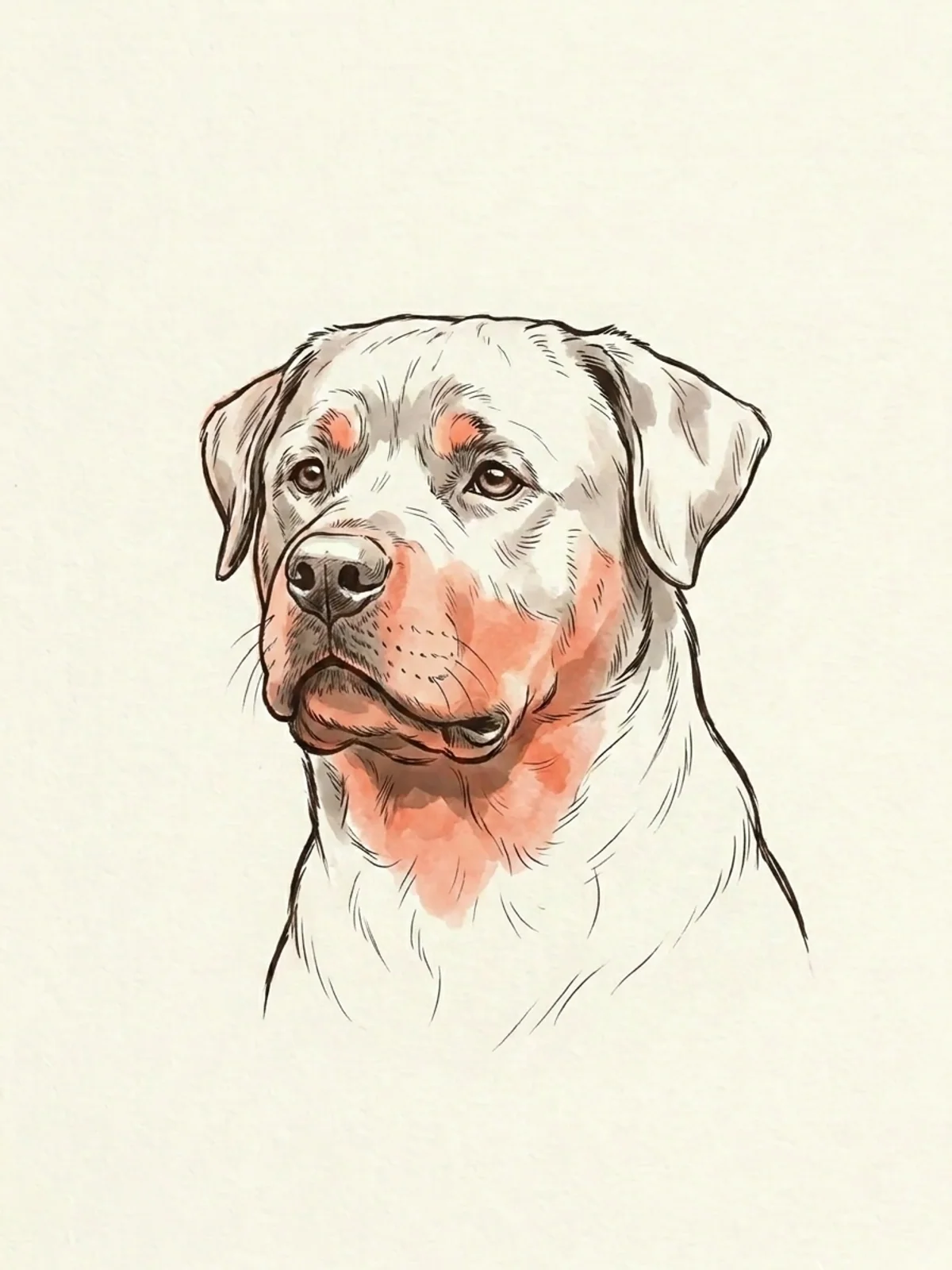
The Rottweiler lives about 9 to 10 years, the shortest average among the major working breeds. That number hides one of the most interesting longevity findings in veterinary medicine: a sizeable minority of Rottweilers reach 13 or even 16 years, and the reasons they do are genetic, hormonal, and partly under an owner’s control. The headline killer is osteosarcoma, the breed-leading cancer of any dog. The headline opportunity is that ovary timing in female Rottweilers has a documented, dose-response effect on lifespan that does not exist in most other breeds.
Key facts
- Typical lifespan: 9 to 10 years (American Kennel Club); mean about 9.4 years in North American pet populations
- Leading cause of death: osteosarcoma, with odds 26.67x higher than crossbreds (UK VetCompass)
- Exceptional longevity (past 13.3 years): only 19% died of cancer vs 82% of usual-longevity dogs (Purdue)
- Spay timing matters: females keeping ovaries past age six were likelier to reach exceptional longevity
- Other risks: subaortic stenosis (congenital, can cause sudden death) and bloat (GDV)
How long Rottweilers actually live
The average Rottweiler lives 9 to 10 years per the American Kennel Club breed profile, with breed-specific research placing the mean closer to 9.4 years in North American pet populations, well below the all-breed average of about 11 years. That is one to two years shorter than the German Shepherd average and roughly three years shorter than the medium-large retrievers. Heavy bone, fast growth, and a stubborn cancer load all bend the curve downward.
Inside that average sits a long tail. The Exceptional Aging in Rottweilers Study at Purdue defined “exceptional longevity” as living past 13.3 years, the 95th percentile of the breed. Dogs in this group lived more than 30 percent longer than the breed average and were strikingly resistant to cancer: only 19 percent of exceptionally aged Rottweilers died of cancer, compared with 82 percent of dogs with usual longevity per the original 2003 Cooley et al. cohort study. Seventy-six percent of the long-lived cohort stayed free of major disease through their first nine years. This is a real biological cohort rather than a survivorship artifact, and the variables that predict membership in it are partially known.
The practical reading is that “9 to 10 years” is an average pulled down by a heavy cancer burden in middle age. Avoiding that burden, by genetics or by the decisions below, can move an individual Rottweiler closer to the right tail.
Osteosarcoma, the breed-defining cancer
Rottweilers carry the highest osteosarcoma risk of any dog breed studied. The UK VetCompass review of breed predisposition reported an annual prevalence of 0.84 percent in Rottweilers, with odds of osteosarcoma 26.67 times higher than crossbred dogs. A separate 258-dog review found that Rottweilers with appendicular osteosarcoma died younger than other breeds with the same diagnosis (mean 7.3 years versus 9 years) and were more likely to show brain metastasis per the PubMed clinical characterization.
The cancer typically presents as a sudden limp in a middle-aged Rottweiler, often after what looked like minor trauma. By the time radiographs are taken, the tumour is usually well established and micrometastases have already seeded the lungs. Median survival with amputation and chemotherapy sits around 10 to 12 months, and limb-sparing options are limited to specialist referral centres. Early radiographs of any unexplained large-breed lameness are worth the money. A two-week wait-and-see approach on a six-year-old Rottweiler’s front leg is a decision with consequences.
The genetics here are heritable but not yet mapped to a single test. The most useful screen is pedigree itself. Ask a breeder which lines have produced osteosarcoma at what ages, and which have not. Reputable Rottweiler breeders track this information, and the ones who refuse to discuss it are answering the question.
Cardiac disease and the bloat problem
Two more conditions shorten Rottweiler lifespans in ways that are partly preventable. Subaortic stenosis (SAS), a congenital narrowing below the aortic valve, runs in Rottweiler lines with what pedigree analysis suggests is an autosomal recessive pattern per the Springer review of canine SAS genetics. Affected dogs face risk of congestive heart failure, endocarditis, and sudden death, sometimes before age five. The screen is a cardiac auscultation by a board-certified cardiologist between 12 and 18 months, with echocardiography if a murmur is heard. The AKC Canine Health Foundation has funded breed-specific work on familial SAS in Rottweilers, and OFA cardiac certifications are increasingly standard among serious breeders.
Bloat, technically gastric dilatation-volvulus (GDV), is the other emergency. Deep-chested large breeds are the highest-risk group, and Rottweilers sit firmly in that population per the Cornell Riney Canine Health Center summary. Mortality runs 10 to 60 percent even with emergency surgery. Prophylactic gastropexy, often performed at the same time as spay or neuter, essentially eliminates the volvulus risk. For a deep-chested Rottweiler with a first-degree relative who has bloated, prophylactic gastropexy is the single most effective surgical decision in the breed.
Hip and elbow dysplasia round out the orthopaedic picture. OFA hip and elbow grading of both parents at minimum 24 months is the standard baseline.
What you can actually do
Three decisions reliably change the odds, on top of the general principles of extending a dog’s lifespan.
The first is spay and neuter timing, where the Rottweiler-specific evidence is unusually strong. The Purdue lifetime ovary exposure study found that female Rottweilers spayed before age four lost their natural survival advantage over males, while females who kept their ovaries past age six were more likely to reach exceptional longevity. The UC Davis breed-specific gonadectomy guidelines led by Benjamin Hart recommend waiting past 6 to 12 months in Rottweilers to reduce joint disease and certain cancers. The conventional six-month spay is a poor fit for this breed.
The second is lean body condition. Every year of excess weight on a Rottweiler frame translates to faster orthopaedic decline and a more taxed cardiovascular system. Target body condition score 4 or 5 on the 9-point scale. Feed measured meals, weigh the dog quarterly, and ignore the back of the bag.
The third is a deliberate cancer-screening schedule from age six. Baseline chest radiographs, abdominal ultrasound, and a complete blood panel give a reference point for catching osteosarcoma, lymphoma, and splenic masses early enough to matter. The interval that lets a tumour become visible to an owner is often the same interval that lets it metastasise.
None of this guarantees fifteen years. It does push the odds toward the tail of the curve where exceptional Rottweilers actually live. Every year counts.
See your Rottweiler’s real age with the calculator, which uses the large breed curve to give you a number that is actually true for your dog.