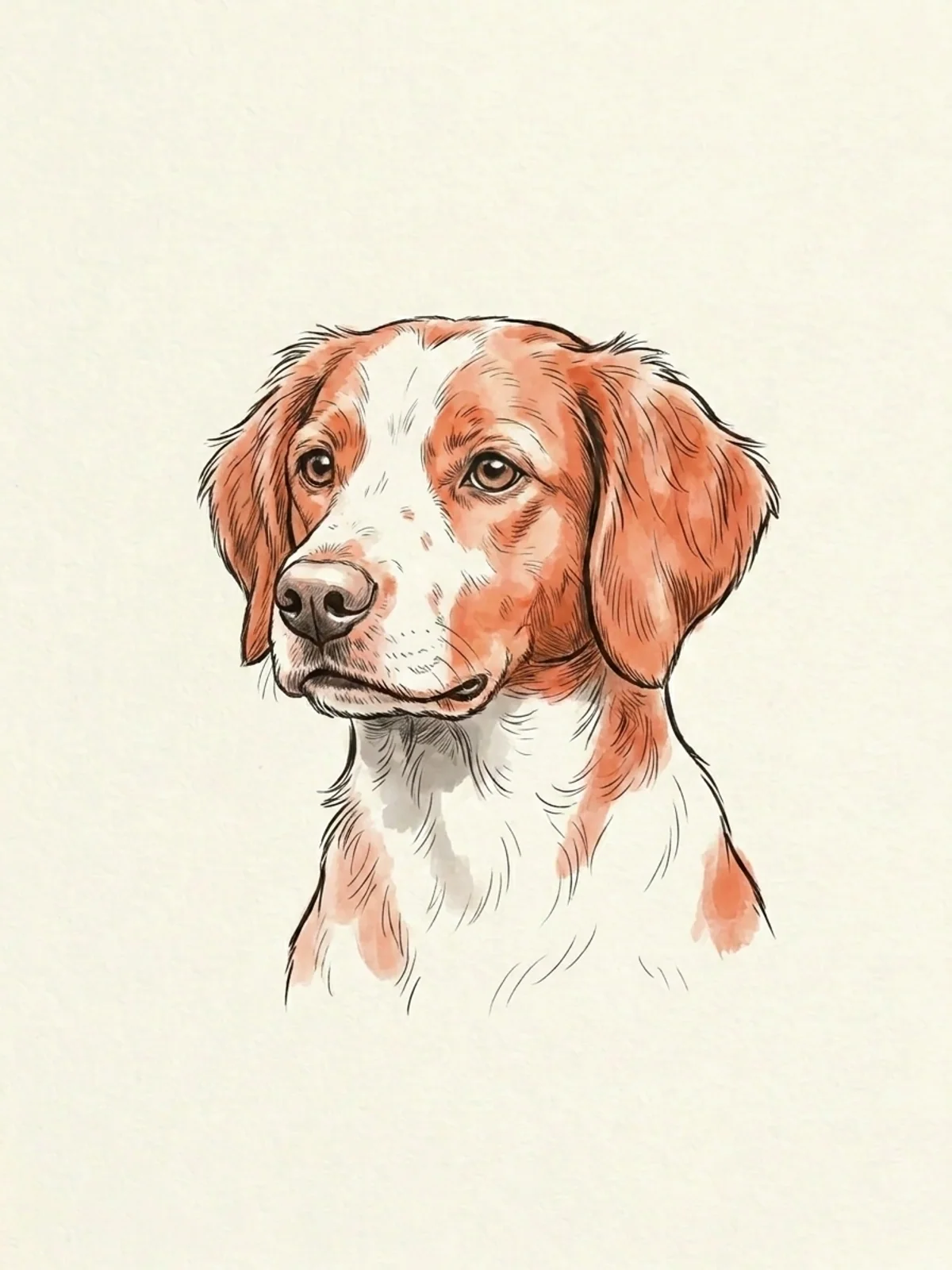
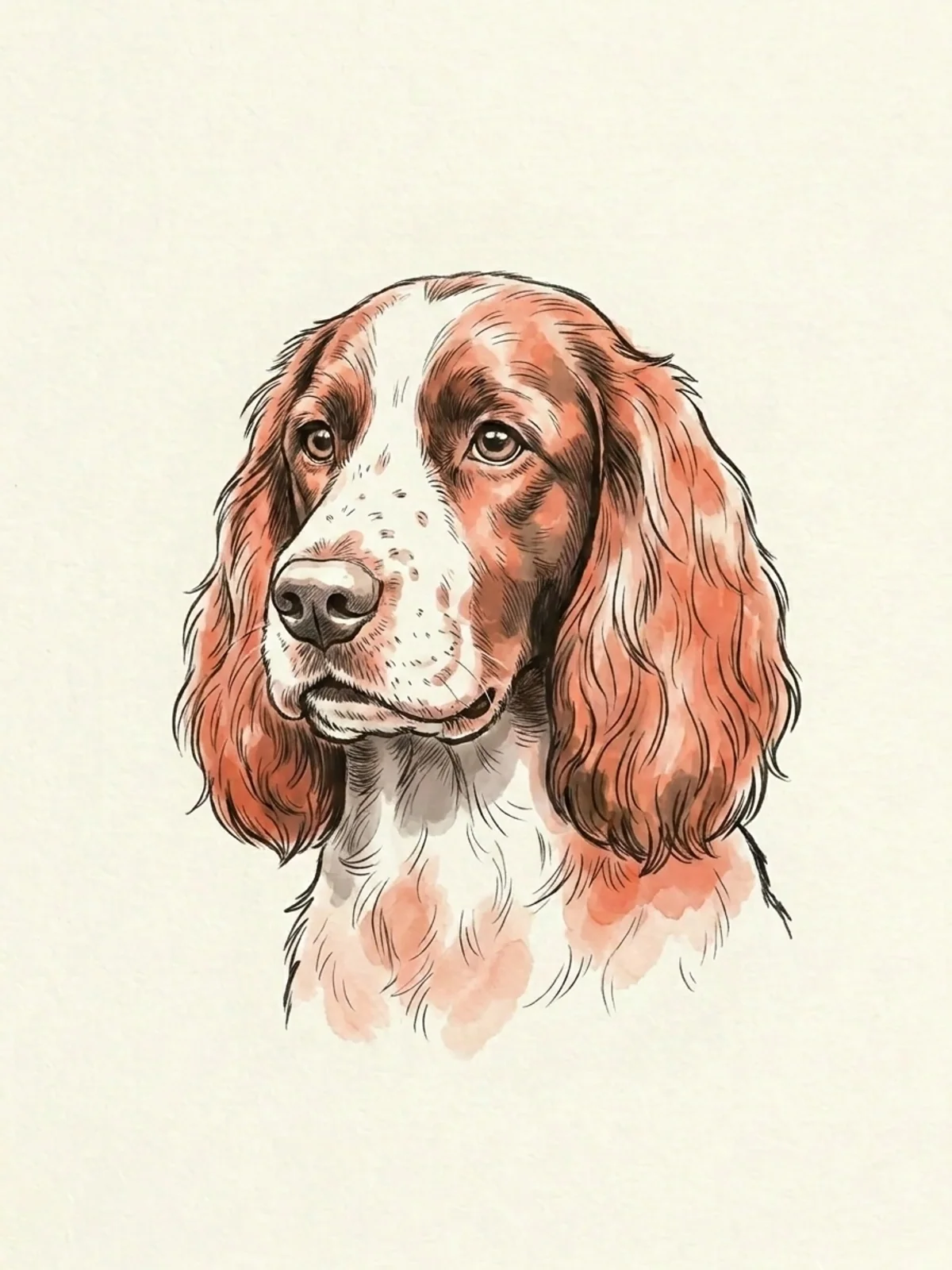
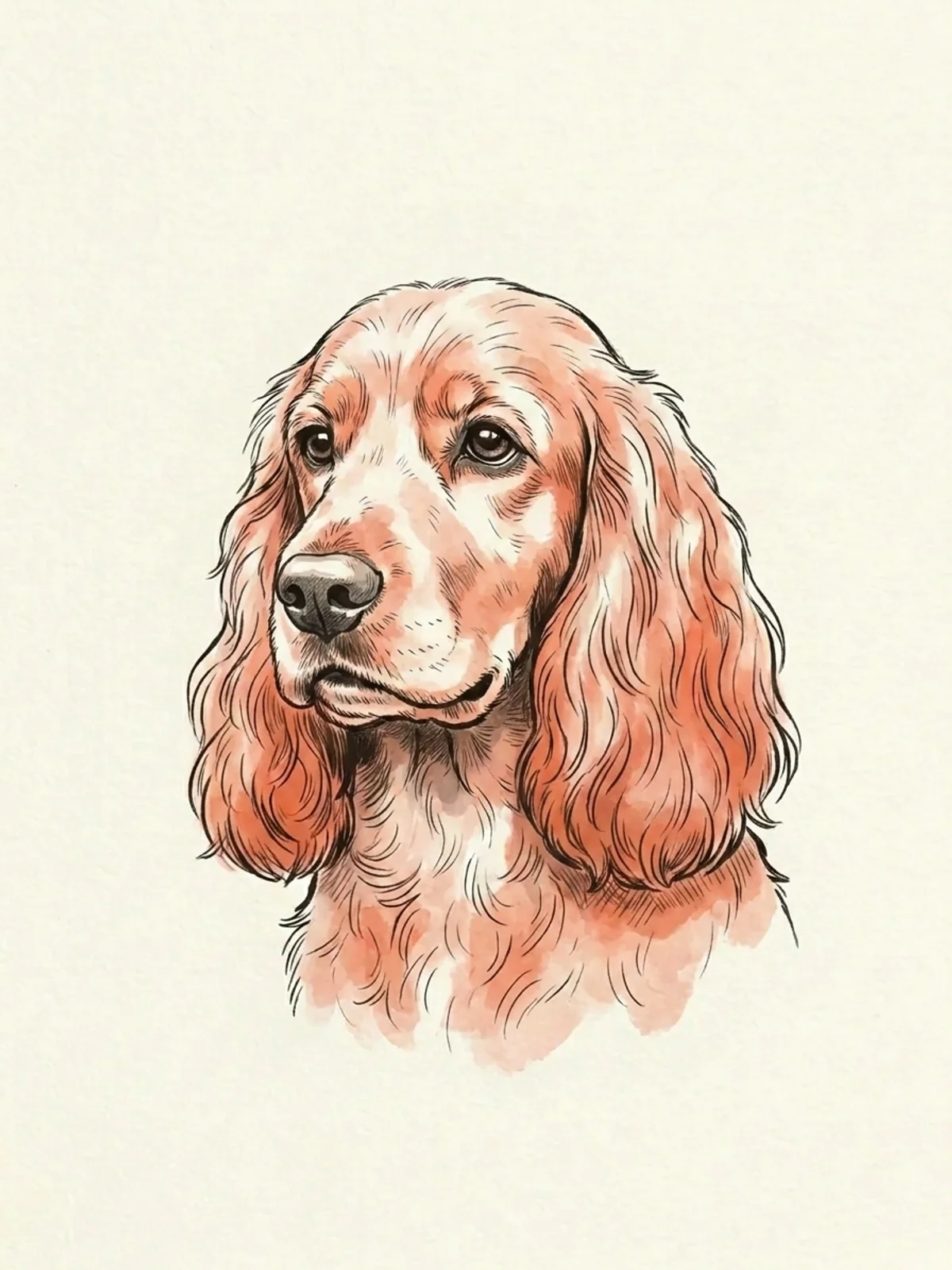
The Brittany lives 12 to 14 years, which is a healthy run for a medium hunting breed and slightly above the all-breed average of about 11 years. Most American owners are surprised by two things when they meet the breed in person. It is smaller than they expected, usually 13 to 18 kilograms, and the name does not include “spaniel” anymore. The American Kennel Club dropped that word in 1982 because the dog points birds rather than springing them, and the field-trial community had been arguing for the change for decades. Today the breed is simply the Brittany, and the naming convention quietly tells you something about how it works in the field.
The dog comes from the Pays d’Arzou region in northwestern France, where it was developed in the mid-1800s to point game birds for hunters working on foot. That working purpose still shapes everything about the modern dog, including its lifespan curve. Brittanys hold up well into old age when they have enough work to do, and they wear down faster when they do not.
Key facts
- Typical lifespan: 12 to 14 years (American Kennel Club), with some reaching 15 to 16
- Primary inherited risks: hip dysplasia, idiopathic epilepsy, glaucoma
- Idiopathic epilepsy onset: typically 1 to 5 years of age, requiring lifelong medication
- Exercise baseline: 60 to 90 minutes of vigorous activity per day
How long Brittanys actually live
The American Kennel Club breed profile places the Brittany at 12 to 14 years. The American Brittany Club, the breed’s parent club in the United States, reports broadly similar numbers in its owner surveys, with a small population reaching 15 or 16. For a dog of this size, that range is reasonable and not exceptional. Cocker Spaniels, slightly heavier, average 10 to 14 years, and English Springer Spaniels land in a comparable 12 to 14 year band. The Brittany sits in roughly the same place on the curve as its close cousins.
What sets the breed apart is its work history. Brittanys have produced more dual champions, dogs that earn both field and show titles, than any other breed in North American gun dog history. That selection pressure for sustained athletic capacity seems to translate into reasonable longevity for working-line dogs that stay active. Show-line dogs and pet-only homes see a slightly different distribution, with more weight gain in middle age and the joint and metabolic problems that follow.
The signature inherited risks
The three health concerns that show up most often in Brittany pedigrees are hip dysplasia, idiopathic epilepsy, and glaucoma. None of them are universal in the breed, but each appears often enough that responsible breeders screen for it.
Hip dysplasia is the most discussed because it is the most visible. The Orthopedic Foundation for Animals hip dysplasia statistics place Brittanys among the medium sporting breeds with measurable dysplasia rates, higher than the breed’s working dog reputation might suggest. The condition is heritable, and breeding pairs should both carry OFA or PennHIP clearances at fair or better. Asking a breeder for parental hip scores is the basic reasonable check, not paranoia.
Idiopathic epilepsy is the harder one. The condition typically presents between one and five years of age with no identifiable cause, and once it appears it requires lifelong management with anticonvulsant medication. A PubMed Central study on idiopathic epilepsy in pointing breeds found prevalence rates in several sporting breeds that suggest a genetic component, though the inheritance pattern in the Brittany specifically has not been fully mapped. The practical reality for owners is that a well-controlled epileptic Brittany can still live a full, working life. Catching the first cluster of seizures early and starting medication on a stable schedule makes the difference between a manageable condition and a frightening one.
Glaucoma in Brittanys is less common than in some terrier breeds but common enough to warrant annual eye exams in middle age. Acute glaucoma is a veterinary emergency. If a dog suddenly squints, develops a cloudy cornea, or stops using one eye, the window for saving vision is measured in hours.
Exercise, work, and quality of life
A Brittany without enough exercise becomes anxious and destructive long before it becomes overweight, which makes the breed somewhat self-correcting in the right home and a poor match for the wrong one. Sixty to ninety minutes of vigorous activity per day is the working baseline, and that is the minimum, not the goal. Field-bred Brittanys can comfortably handle several hours of upland hunting over rough cover, and they expect that kind of work during the season.
The quality-of-life implication for lifespan is direct. Brittanys that get enough exercise hold their muscle mass and joint conditioning well into their second decade. Brittanys that do not lose both, often quickly, once weight begins to climb. Joint problems compound, the dog moves less, weight increases further, and the loop tightens. Owners who treat the breed like a moderate-energy companion are usually surprised by how fast a healthy seven-year-old can decline into a stiff, overweight nine-year-old. The dog needs the work to age well.
This is also where the working-line and show-line distinction matters, though less starkly than in Cockers or Springers. Show-line Brittanys still need substantial daily exercise. The difference is closer to a question of intensity than fundamental drive.
What actually extends a Brittany’s life
Alongside the general principles of extending a dog’s lifespan, the specific priorities for a Brittany are early hip screening, vigilant attention to first seizures, annual eye exams from middle age onward, and a daily exercise schedule that respects what the dog was bred for. Each of those is a known intervention with a known payoff. Catching epilepsy in the first cluster rather than the third changes the long-term medication picture. Identifying hip dysplasia at the radiographic stage rather than the limping stage opens up earlier weight management and surgical options. Annual eye exams catch glaucoma before vision is gone.
Good food, lean body weight, and a vet who knows the breed cover most of the rest. Brittanys are not a complicated dog medically. They are a working breed in a slightly compact frame, with a predictable set of inherited risks, and a lifespan that rewards owners who treat the dog as the athlete it actually is.
See your Brittany’s real age with the calculator, which uses the medium breed curve to give you a number that is actually true for your dog.