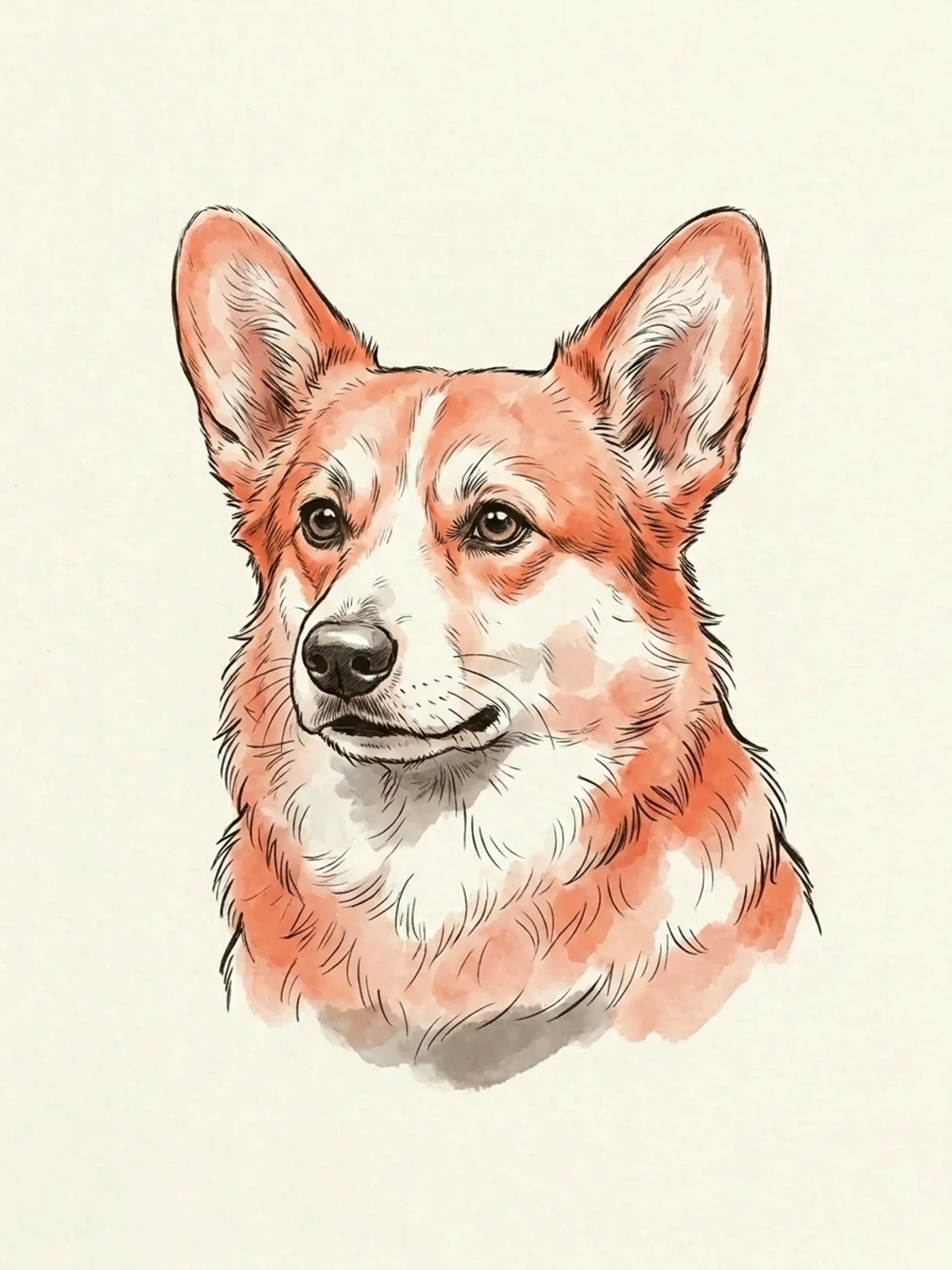
Pembroke Welsh Corgis live 12 to 13 years on average, slightly above the all-breed average of about 11 years and respectable for a medium-sized dog. The breed is generally healthy, and many corgis reach their early teens without serious illness. What limits them is not some vague fragility but a specific set of structural and genetic risks that follow directly from what they are: a chondrodystrophic breed, meaning short legs attached to a full-length spine. Understanding those risks gives owners a clear list of things to actually do, which makes the lifespan number more meaningful than it looks on its own.
Key facts
- Typical lifespan: 12 to 13 years (American Kennel Club); 11.9-year average at death in a 2021 to 2022 Welsh Corgi League survey
- Primary spinal risk: intervertebral disc disease (IVDD), elevated by chondrodystrophic body shape
- Degenerative myelopathy genetics: 52.7% test homozygous at-risk for SOD1, but only about 1.1% develop the disease
- Weight effect: overweight dogs lived up to 2.5 years fewer across 12 breeds studied
How long Corgis actually live
The American Kennel Club puts the Pembroke Welsh Corgi lifespan at 12 to 13 years. That figure sits solidly within the medium-breed range and reflects what responsible breeders and breed club members report in practice.
The Pembroke Welsh Corgi Club of America describes the breed as “relatively healthy with just a few health concerns,” and the Welsh Corgi League’s annual health survey data supports a similar picture, with average age at death reported at 11.9 years in their 2021 to 2022 survey across a sample of member dogs. Survey samples are small and self-selected, so these figures are directional rather than definitive. Still, they point consistently toward a breed that can reach 12 or 13 years under reasonable care.
What shapes that range is largely what happens to the spine and whether weight stays under control.
The spine: IVDD and degenerative myelopathy
The Pembroke Welsh Corgi shares its body plan with the Dachshund and French Bulldog: abnormally short, curved limbs attached to a normal-length torso. This is chondrodystrophic conformation, and it comes with a predictable cost. The intervertebral discs in chondrodystrophic dogs undergo premature calcification, losing the water-holding proteoglycans that keep discs pliable. A calcified disc can herniate under ordinary movement, compressing the spinal cord.
Researchers at PMC/NCBI identify intervertebral disc disease (IVDD) as “the most common spinal disease in dogs,” with chondrodystrophic breeds at significantly elevated risk compared to the general dog population. Corgis are named explicitly in that elevated-risk group alongside Dachshunds, Beagles, and French Bulldogs. The combination of spinal length, disc vulnerability, and the everyday physical stress of jumping off furniture creates a real exposure.
The second neurological concern is degenerative myelopathy (DM), a progressive disease of the spinal cord with a late-life onset, typically around age 11. The PWCCA’s DM page reports that 52.7% of Pembroke Welsh Corgis test homozygous “at risk” for the SOD1 gene mutation, with another 35.1% carrying one copy. The clinical picture is less alarming than those percentages suggest: researchers at UC Davis found only about 1.1% of at-risk dogs actually develop the disease, pointing to additional genetic modifiers. Even so, DM is incurable, and a dog that develops it will lose hindlimb function over months to years. Testing does not remove the risk, but it informs breeding decisions.
Weight and heart health
Corgis are food-motivated. That trait made them excellent herding dogs and makes them reliable companions in a kitchen, but it also means they gain weight faster than many other breeds and do so quietly, adding grams before owners notice the change in silhouette.
A University of Liverpool and Mars Petcare study published in the Journal of Veterinary Internal Medicine found that overweight dogs across 12 breeds lived up to 2.5 years fewer than dogs at a healthy weight, with the correlation appearing in every breed examined, per the American Veterinary Medical Association’s coverage of that research. For a corgi, excess weight is a compounded problem because every extra kilogram increases the mechanical load on a disc that is already predisposed to calcification. A dog that is overweight and chondrodystrophic faces elevated IVDD risk from two directions at once.
Cardiac screening is listed as an optional health test by the PWCCA and is not considered the breed’s primary concern, but the PWCCA health and genetics page notes it as part of a comprehensive health picture. Obesity is a known contributor to cardiac strain in dogs generally, which gives another reason to keep weight controlled beyond spinal health alone.
What owners can actually do
The good news is that the risks above are unusually actionable. They are not vague predispositions but specific mechanisms with specific preventions, and the general principles of extending a dog’s lifespan apply on top with extra emphasis on weight control and spinal protection.
-
Install ramps, not stairs. Jumping down from furniture generates impact forces on the lumbar discs. A carpet-covered ramp to the sofa and bed costs less than one IVDD surgery and eliminates the highest-frequency spinal stress event in a typical corgi’s day.
-
Weigh the food, not the bowl. Corgis will eat past satiety. Measuring every meal by weight rather than cup estimate removes the drift that leads to gradual obesity. Ask your vet for the target body condition score (BCS) for your specific dog, check it monthly, and adjust portions accordingly.
-
Keep daily exercise consistent. The AVMA-reported research and related IVDD studies both flag low exercise as a risk factor. Corgis are herding dogs with real endurance; 30 to 45 minutes of ground-level walking daily supports disc health, weight maintenance, and muscle tone around the spine.
-
Test for DM before breeding. If your corgi is intact and you are considering breeding, the OFA offers SOD1 genetic testing. At-risk-by-at-risk pairings will produce 100% at-risk offspring. The PWCCA advises against using sod1 results as the sole breeding criterion, but including it alongside pedigree history of confirmed DM cases is reasonable risk management.
-
Keep spinal screenings current. Any hindlimb weakness, stumbling on rear legs, or change in gait in a corgi older than 8 warrants prompt veterinary assessment. Early-stage IVDD is often manageable with rest and medication; delayed treatment of a disc herniation can mean the difference between recovery and permanent paralysis.
See your Corgi’s real age with the calculator, which uses the medium breed curve to give you a number that is actually true for your dog.