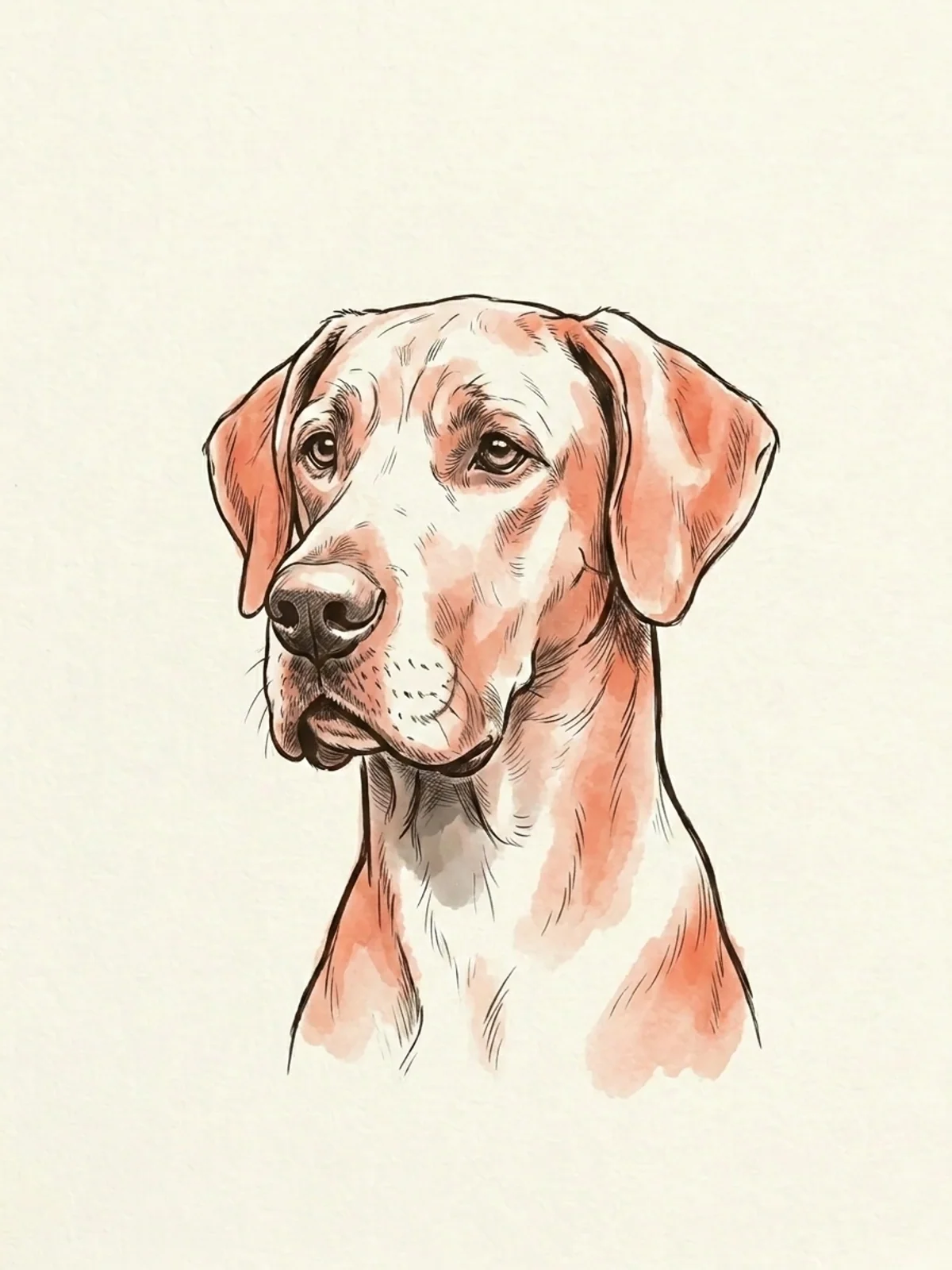
The Great Dane lives about 7 to 10 years, well below the all-breed average of about 11 years and the shortest figure of any popular AKC breed. That number is the canonical example of the rule that, inside the species Canis familiaris, bigger means shorter, rather than a story of bad luck or bad breeding. A Dane’s biology is running on a faster clock than a Chihuahua’s, and two specific emergencies, bloat and dilated cardiomyopathy, sit on top of that clock waiting to end things sooner. The good news is that both have known interventions, and a Dane owner who knows what to look for is a Dane owner whose dog has a real shot at the right end of the range.
Key facts
- Typical lifespan: 7 to 10 years (AKC), the shortest of any popular AKC breed; a 2024 study put the breed mean at 10.6 years.
- Bloat (GDV) is the most common cause of death, with a lifetime risk of about 40%, higher than any other breed.
- Prophylactic gastropexy cuts GDV recurrence to under 5% (vs 80% without it).
- Dilated cardiomyopathy affects 11.8 to 35.6% of Danes; DCM and sudden cardiac death cause 20 to 35% of breed deaths.
The average Great Dane lives 7 to 10 years per the American Kennel Club Great Dane life-span overview. A 2024 UK VetCompass-style population study put the breed mean at 10.6 years against 12.7 for purebreds and 12.0 for crossbreeds, which is consistent with what most veterinarians see. Eleven or twelve is reachable. Thirteen is rare. The verified ceiling sits around 15 to 16 years per the Oldest.org survey of breed records, and even those claims thin out under scrutiny.
The size-lifespan inversion is the headline. Across mammals as a whole, bigger species live longer. Inside dogs, the rule flips, and the Great Dane is the textbook case. A serum IGF-1 study following more than 400 dogs across breeds found that IGF-1 levels rise with body size and correlate with shorter lifespan per the PMC analysis by Greer and colleagues. A Dane puppy puts on 100 pounds in a year, and that growth runs on the same hormonal axis that accelerates cellular turnover and senescence. The price of becoming enormous fast is aging fast.
“Average” hides the usual things. Color-dilute lines, harlequin crosses, and conformation breeders all sit at different points on the curve. The single best predictor of an individual Dane’s lifespan is the documented age-at-death of its parents and grandparents, which a serious breeder will share without prompting.
Bloat is the emergency that defines the breed
Gastric dilatation-volvulus, called bloat, is the most common cause of death in Great Danes. The lifetime risk runs about 40 percent per the Veterinary Partner prophylactic gastropexy review, which is higher than any other breed studied. The stomach distends with gas, twists on its axis, cuts off its own blood supply, and the dog has hours, sometimes less. Mortality runs 10 to 45 percent even with emergency surgery per the Cornell Riney Canine Health Center GDV summary.
Prophylactic gastropexy is the intervention. The surgery permanently tacks the stomach to the body wall and effectively eliminates volvulus, the twisting that does the killing. In dogs with prior GDV, gastropexy drops recurrence to under 5 percent against 80 percent without it. Most veterinary surgeons recommend it for Danes as a routine add-on at spay or neuter, when the abdomen is already open. For a breed where roughly two in five dogs will face the emergency, declining the procedure is the decision that needs the justification, not accepting it.
Knowing the signs matters as much as the surgery. A restless Dane, unproductive retching, a distending abdomen, and pale gums are the picture. The window between “something is off” and “the stomach has twisted” is short. Phone-ahead to the emergency clinic; do not wait until morning.
Why the heart and the spine fail next
Dilated cardiomyopathy is the second mortality story. Prospective screening puts DCM prevalence in Great Danes between 11.8 and 35.6 percent, with one in five Danes between ages 7 and 8 showing subclinical or clinical disease per the UK Great Dane Breed Council DCM summary. DCM and sudden cardiac death together account for 20 to 35 percent of breed deaths. Pedigree analysis in the PubMed 17-case Great Dane DCM study by Meurs and colleagues supported an X-linked recessive inheritance pattern, which means male Danes carry disproportionate risk. Median survival after clinical signs appear is striking: the breed-specific average from prior series sat near 5 weeks, with a maximum of 39, far below the all-breed DCM average of about 19 weeks.
The screen is annual cardiac auscultation from age three and an echocardiogram with Holter monitoring from age five. Catching DCM in its occult phase, before the dog collapses, is the only realistic path to extending the timeline. The drug regimens that work in cavaliers and Dobermans work in Danes, but the window is narrow.
Wobbler syndrome, the cervical vertebral malformation that produces a swaying hind end, affects roughly 4 percent of Great Danes per the UFAW Great Dane CVM profile. Median onset for inherited orthopaedic disease in giant breeds is age four. The contributing factor that owners actually control is puppyhood nutrition. Ad libitum feeding and excess calcium in young Danes disrupt skeletal remodelling and raise the prevalence of cervical malformation, hypertrophic osteodystrophy, and panosteitis. A large-breed puppy formula with controlled calcium and phosphorus, fed measured, is the baseline standard of care for this breed.
What you can actually do
Four decisions change the odds, and the general principles of extending a dog’s lifespan apply on top of them with extra emphasis on the giant-breed risks below.
First, schedule prophylactic gastropexy at spay or neuter. For a Dane, this is the single most effective surgical decision available, and the math is not close.
Second, feed a large-breed puppy diet by measured weight through the first 18 to 24 months, and target lean body condition score 4 on the 9-point scale across life. Slow, steady growth produces sounder joints, sounder vertebrae, and a Dane that reaches eight or nine without an orthopaedic surgery.
Third, get an annual cardiac auscultation from age three and an echocardiogram from age five. Subclinical DCM is silent until the day it isn’t. A baseline echo against which to compare the next one is the difference between catching the disease and being surprised by it.
Fourth, when choosing a breeder, ask for the documented age and cause of death of the parents, grandparents, and any prior litter mates. Reputable Dane breeders track this. The ones who refuse to discuss it are answering the question.
A Great Dane is built on a faster clock than a small dog, and no amount of careful ownership rebuilds that biology. What careful ownership does is keep the dog at the right end of its range, away from the two emergencies that pull the average down. Every year counts.
See your Great Dane’s real age with the calculator, which uses the giant breed curve to give you a number that is actually true for your dog.