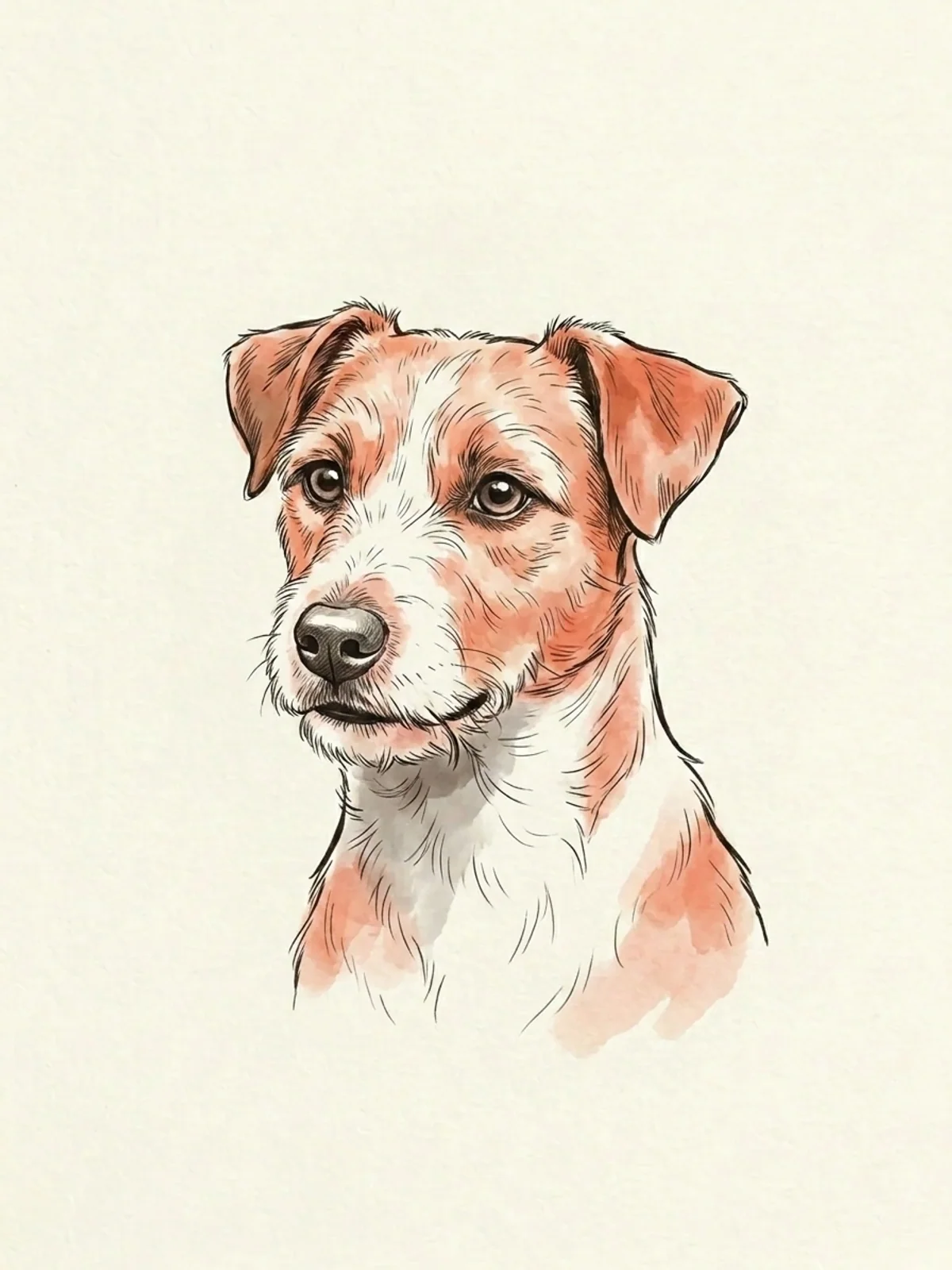
Jack Russell Terriers live a long time. The Jack Russell Terrier Club of America puts the typical range at 13 to 16 years, and that range holds across most health surveys of the breed. Working-bred lines regularly produce dogs that reach 15 or 16. Individual dogs have been documented past 20. For a small terrier that weighs 6 to 8 kilograms, this puts them well above the all-breed average of about 11 years and in a different category from most dogs their size.
Key facts
- Typical lifespan: 13 to 16 years (Jack Russell Terrier Club of America), well above the ~11-year all-breed average.
- Working-bred lines regularly reach 15 or 16; individual dogs have been documented past 20.
- Primary lens luxation, the main genetic concern, is caused by an ADAMTS17 mutation with an inexpensive DNA test.
- Legg-Calvé-Perthes disease usually appears before 12 months; deafness occurs in some white-coated dogs (BAER test detects it).
How long Jack Russells actually live
Thirteen to 16 years is the realistic range for a well-cared-for Jack Russell, with the upper end more common than most owners expect. The American Kennel Club lists a similar span for the closely related Russell Terrier, and owners in working terrier circles regularly report dogs active and sharp at 14 or 15.
The wide range matters. A dog at 13 and a dog at 16 both fall within “normal.” What separates them is usually a combination of genetics, whether they came from working lines or heavily show-bred stock, weight management across their life, and early detection of the conditions that do affect the breed. None of those factors are outside your control.
Why Jack Russells live so long
Reverend John Russell developed these terriers in the 1800s for endurance fox hunting, the kind of work that selects hard for physical soundness. A dog that tired early, broke down at 8, or went lame from joint problems was not useful. That selection pressure ran for generations before the breed was ever formalized on paper.
The working terrier gene pool historically remained broader than most registered breeds. Breeders prioritized function over appearance, which meant less intense inbreeding to produce a specific show-ring look. That breadth may be part of why health problems are less common than in heavily show-bred lines. Compare this to the French Bulldog, where a century of selection for a flat face and compact body has produced a breed now facing widespread respiratory, spinal, and birthing complications documented in a 2016 Canine Genetics and Epidemiology study. Or the Cavalier King Charles Spaniel, where syringomyelia, a painful neurological condition caused by skull shape, affects a substantial proportion of the breed population. Jack Russells do not carry that kind of structural burden.
The result is a breed where the inherited conditions that shorten other dogs’ lives simply appear less often. That outcome is predictable from a gene pool selected for toughness rather than aesthetics, not luck.
Health risks Jack Russells do face
Jack Russells are not without inherited conditions. Knowing the specific ones lets you manage them before they become serious.
Lens luxation is the primary genetic concern. The lens of the eye dislocates from its normal position, causing pain and, if untreated, blindness. Primary lens luxation in terriers is caused by a mutation in the ADAMTS17 gene, and a DNA test developed by researchers at Animal Health Trust can identify carriers and affected dogs before symptoms appear. Dogs that test clear are not at risk. Dogs that carry one copy are at low risk but should be monitored. Dogs with two copies of the mutation face a meaningful chance of developing the condition. The test is inexpensive and worth doing once. Caught early, lens luxation is treatable with surgery and does not have to shorten a dog’s life.
Legg-Calve-Perthes disease appears in some Jack Russell lines. The head of the femur degenerates due to interrupted blood supply, causing hip pain and lameness, usually before 12 months of age. It affects small breeds more commonly than large ones, and Jack Russells are among those with documented incidence. Surgery resolves most cases, and affected dogs typically recover full function. It is painful and expensive to treat, but not a lifespan-shortening condition if managed.
Deafness occurs in some white-coated individuals. The same genetic pathway that produces white pigmentation can affect the cochlea, resulting in unilateral or bilateral deafness. A BAER hearing test identifies deaf puppies early. Deaf dogs can live full, healthy lives with appropriate management and training adjustments. Deafness itself does not affect longevity.
None of these conditions have to define the breed’s health picture. Awareness, a DNA test for lens luxation, and a BAER test for white-coated puppies cover the most significant risks, and the general principles of extending a dog’s lifespan apply on top of those breed-specific checks.
Senior Jack Russells
Jack Russells age well. Many remain fast, sharp, and genuinely difficult to tire at 12 or 13. The activity level does decline in the mid-teens, but cognitive sharpness often holds longer than in other breeds. Owners regularly describe their 14-year-old Jack Russell as mentally alert even when the body has started to slow down.
What changes first is recovery. A 13-year-old Jack Russell will still want to run, but will need longer to recover from a hard day of exercise than they did at 5. Watch for stiffness after rest, slower warm-up periods before activity, and reluctance to jump onto furniture they previously leaped onto without hesitation. These are signs to adjust exercise intensity, not to stop it.
Hearing loss is common in senior Jack Russells, separate from the congenital deafness that affects some white-coated puppies. Age-related hearing decline is gradual and manageable. Owners who learn hand signals early, even when their dog’s hearing is fine, find the transition much smoother. A dog that has always responded to visual cues adapts to relying on them completely without confusion.
Joint stiffness and mild cognitive changes appear in the oldest individuals, typically past 15. For a breed that aged this well this long, that is an acceptable endpoint. The productive, active years preceding it are usually many.
See your Jack Russell’s real age with the calculator, which uses the small breed curve to give you a number that is actually true for your dog.