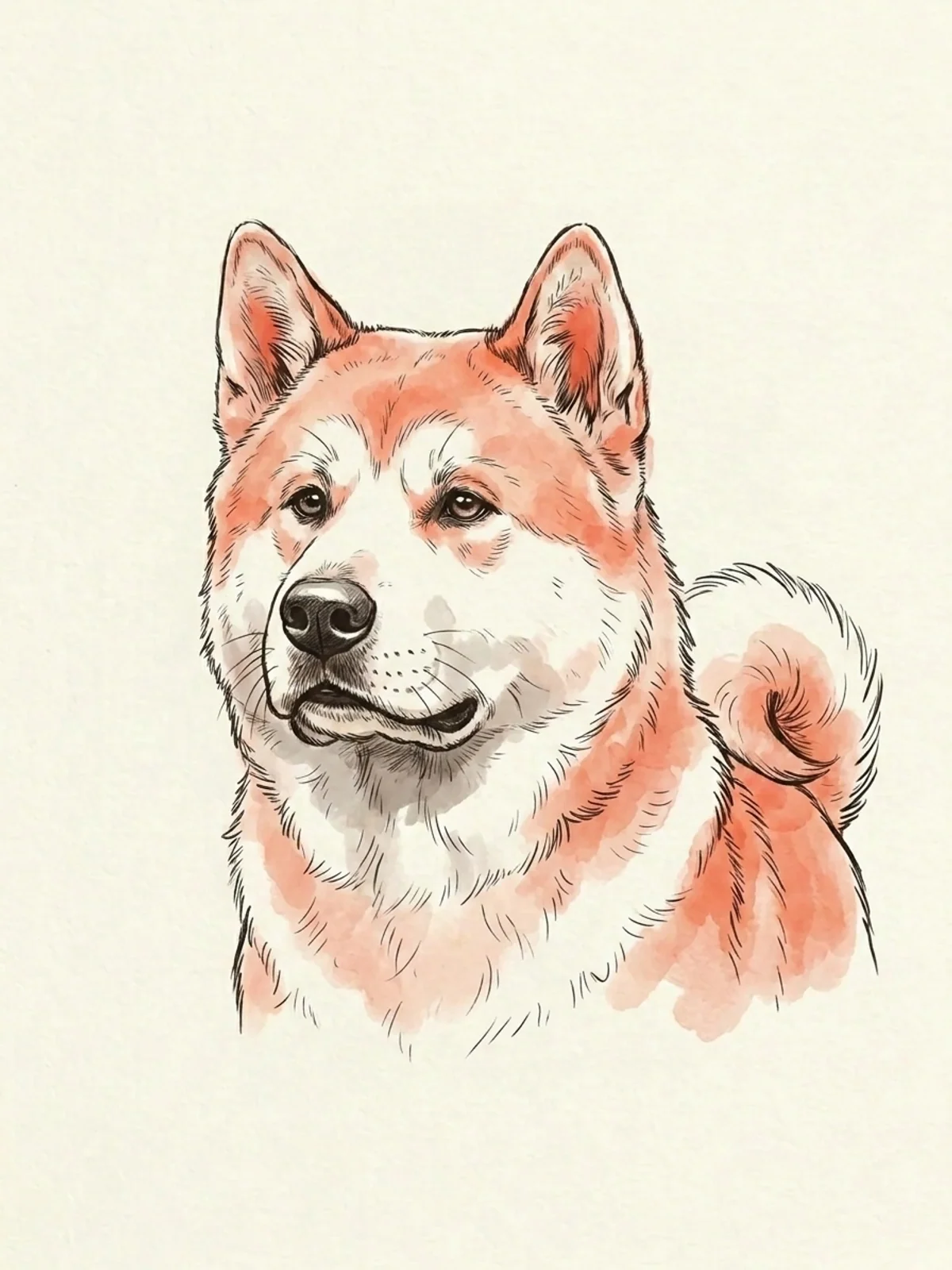
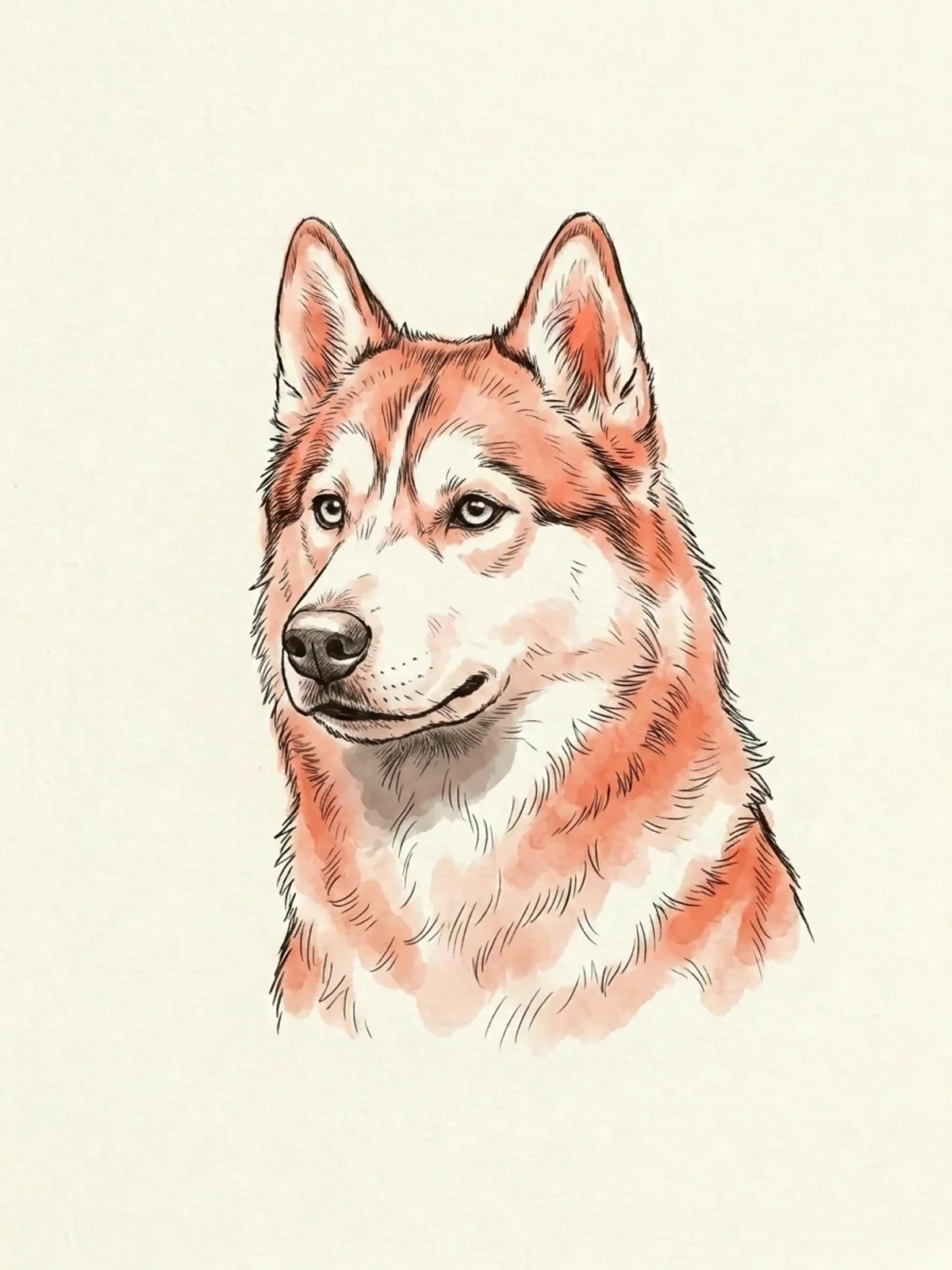
The Akita lives about 10 to 13 years according to the American Kennel Club breed profile. That is a respectable run for a dog this size, and it puts the breed comfortably above the Bernese Mountain Dog, the Newfoundland, and the Great Dane on any large-breed comparison. UK VetCompass data and Japanese primary-care studies both place the median closer to 11.5 or 12 years, which is roughly what owners report in practice. The story underneath the number is mostly about the immune system.
Key facts
- Typical lifespan: 10 to 13 years (American Kennel Club); median closer to 11.5 to 12 years (VetCompass and Japanese primary-care data)
- Heavy autoimmune burden: pemphigus foliaceus, sebaceous adenitis, and uveodermatologic (VKH-like) syndrome, the last striking at age 2 to 5
- Inherited anesthesia sensitivity: Japanese spitz-type potassium handling raises risk with acepromazine and thiopentone
- Cancer mortality sits in the moderate band, well below the Bernese Mountain Dog and Golden Retriever
How long Akitas actually live
The AKC range applies to both the American Akita and the Japanese Akita Inu, which are now recognized as genetically distinct lines. American Akitas are larger and more bear-like, descended from the dogs returning soldiers brought back after the second world war. Japanese Akita Inu kept the foxier face and smaller frame of the original mountain hunters from Akita Prefecture, where the breed was developed to track bear and wild boar. The two lines share most of the same health problems, so the lifespan figure travels with the breed name rather than the type.
Hachiko of Shibuya, the famously loyal Akita who waited at the train station for nine years after his owner died, lived to about 11. That is roughly the breed median, and a useful anchor when reading sales pitches that promise 14-year-old Akitas as a norm. They exist. They are not common. A well-bred Akita from screened parents, kept lean and seen regularly by a vet who knows the breed, has a reasonable shot at 12 or 13. Past that point the curve falls off quickly, as it does for any dog over 35 kilograms.
Sex differences in the breed are small. Geography matters more than sex, partly because Japanese lines carry slightly different allele frequencies on autoimmune risk genes, and partly because population size shapes how visible rare diseases become in the data.
The autoimmune burden
Akitas carry an unusually heavy load of autoimmune disease for a working breed. Three conditions appear often enough that any prospective owner should know the names. Pemphigus foliaceus, an autoimmune skin disease that produces crusting around the face and footpads, occurs in Akitas at rates well above the canine baseline. Sebaceous adenitis, an inflammatory destruction of the sebaceous glands that leaves the coat dull and patchy, is so common in the breed that the Akita Club of America lists it among its core screened conditions on the club health page. Immune-mediated thrombocytopenia and immune-mediated hemolytic anemia round out the picture, and either can kill a young dog quickly when it strikes.
Uveodermatologic syndrome, often called canine Vogt-Koyanagi-Harada-like disease, is the most striking of the breed’s autoimmune problems. It targets the pigment-producing cells of the eye and skin and can blind a dog within weeks if untreated. A PMC review of canine VKH-like syndrome describes the disease as being heavily over-represented in Akitas, Siberian Huskies, and other Japanese spitz-type breeds, with onset typically between two and five years of age. Early aggressive immunosuppression saves vision in most cases. Late presentation does not.
None of these conditions is rare enough to ignore. An Akita who develops sudden facial crusting, patchy bilateral coat loss, or any change in eye color deserves a same-week vet appointment with someone who has seen the breed before.
Other Akita health risks
Hip dysplasia is present in the breed at moderate rates, lower than in retrievers but high enough that OFA or PennHIP screening of breeding stock is the norm. Hypothyroidism is widespread and easy to miss because the early signs, lethargy and a slowly thickening coat, can be mistaken for the breed’s natural reserve. A TSH and free T4 panel costs less than one orthopedic consult and catches the disease at a point where daily levothyroxine fully manages it.
Anesthesia sensitivity is the one risk that often surprises new owners. Akitas, like other Japanese spitz-type breeds, carry an inherited difference in red blood cell potassium handling and tend to be more sensitive than average to acepromazine, thiopentone, and several common anesthetic combinations. A veterinary anesthesia review on breed-specific protocols recommends adjusted dosing and avoiding certain agents in Japanese breeds, and any vet doing a dental or spay on an Akita should know this before the dog is on the table.
Cancer in Akitas is present but not breed-defining. Gastric dilatation-volvulus is a deep-chested-breed risk, and prophylactic gastropexy at the time of spay or neuter removes the most acute version of that threat. The pillar guide on dog cancer rates by breed puts Akita cancer mortality in the moderate band, well below the Bernese Mountain Dog and the Golden Retriever.
What actually extends an Akita’s life
The most useful decision is choosing a breeder who screens hips, thyroid, and at least one autoimmune marker, and who can show three generations of results rather than two. Lines with documented screening produce dogs with later disease onset on average, which is the same pattern seen across the shortest-living dog breeds where genetic loading dominates outcome.
The second is a vet who has seen the breed before, ideally one willing to keep a written note on the file about anesthesia protocols. The first time this matters is usually a spay or neuter at six to nine months, and the cost of getting it wrong is much higher than the cost of asking the question.
The third is lean weight. The general logic behind the pillar guide on how to extend your dog’s lifespan applies here without qualification. A lean Akita carries less mechanical load on dysplastic hips, holds insulin sensitivity longer, and tends to die later of whatever ends up killing them. Daily moderate exercise suits the breed’s temperament better than weekend sprints, and an Akita kept at body condition score 4 or 5 will often outlive a kennelmate of the same line by a year or more. For context on where this breed sits among large dogs, the average dog lifespan guide places the Akita in the upper third of breeds over 30 kilograms.
None of this overrides bad genetics. What it does is buy time inside the genetics you have, which for a dignified, reserved dog who tends to bond hard with one household is the realistic goal.
See your Akita’s real age with the calculator, which uses the large breed curve to give you a number that is actually true for your dog.