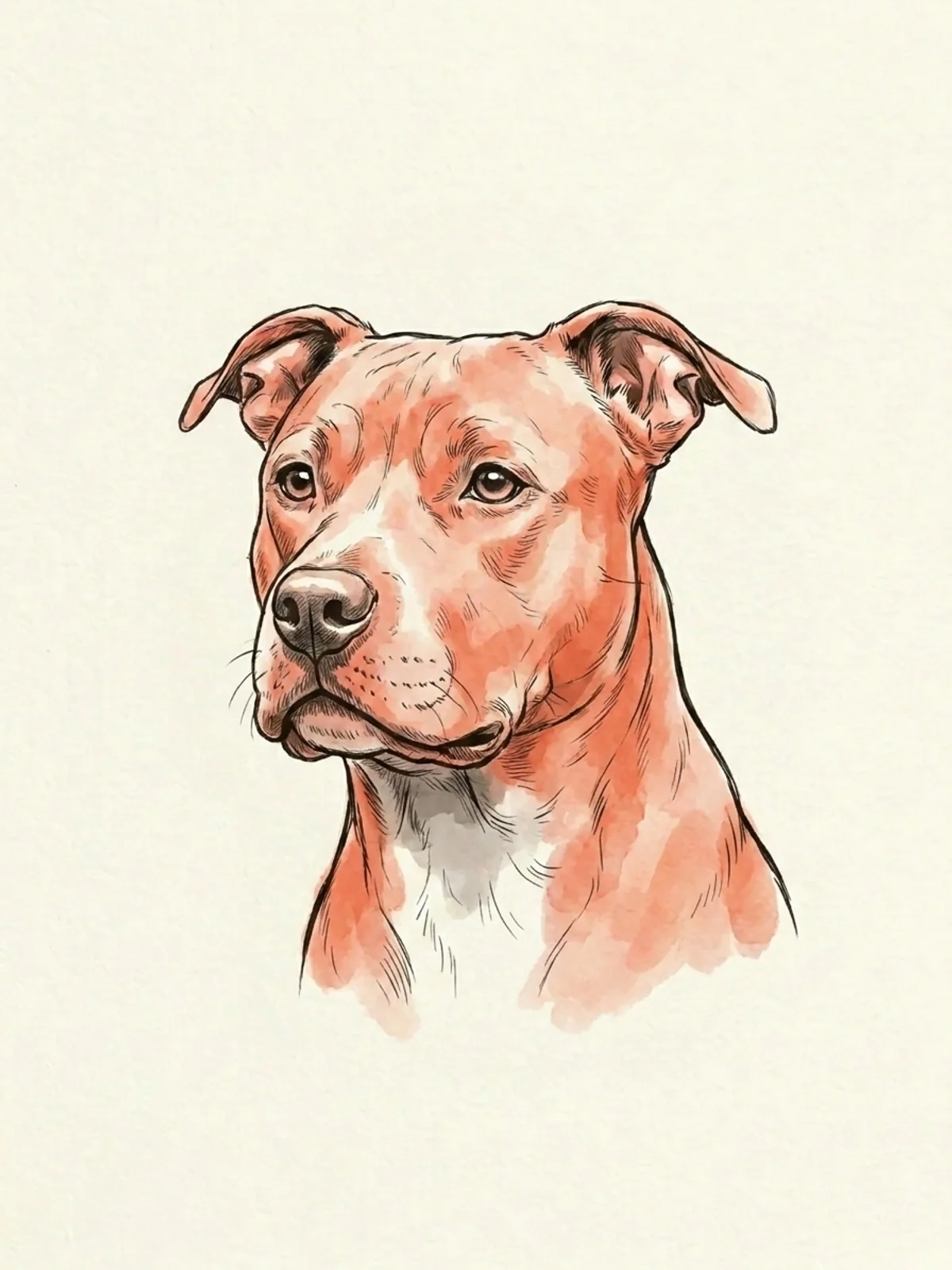
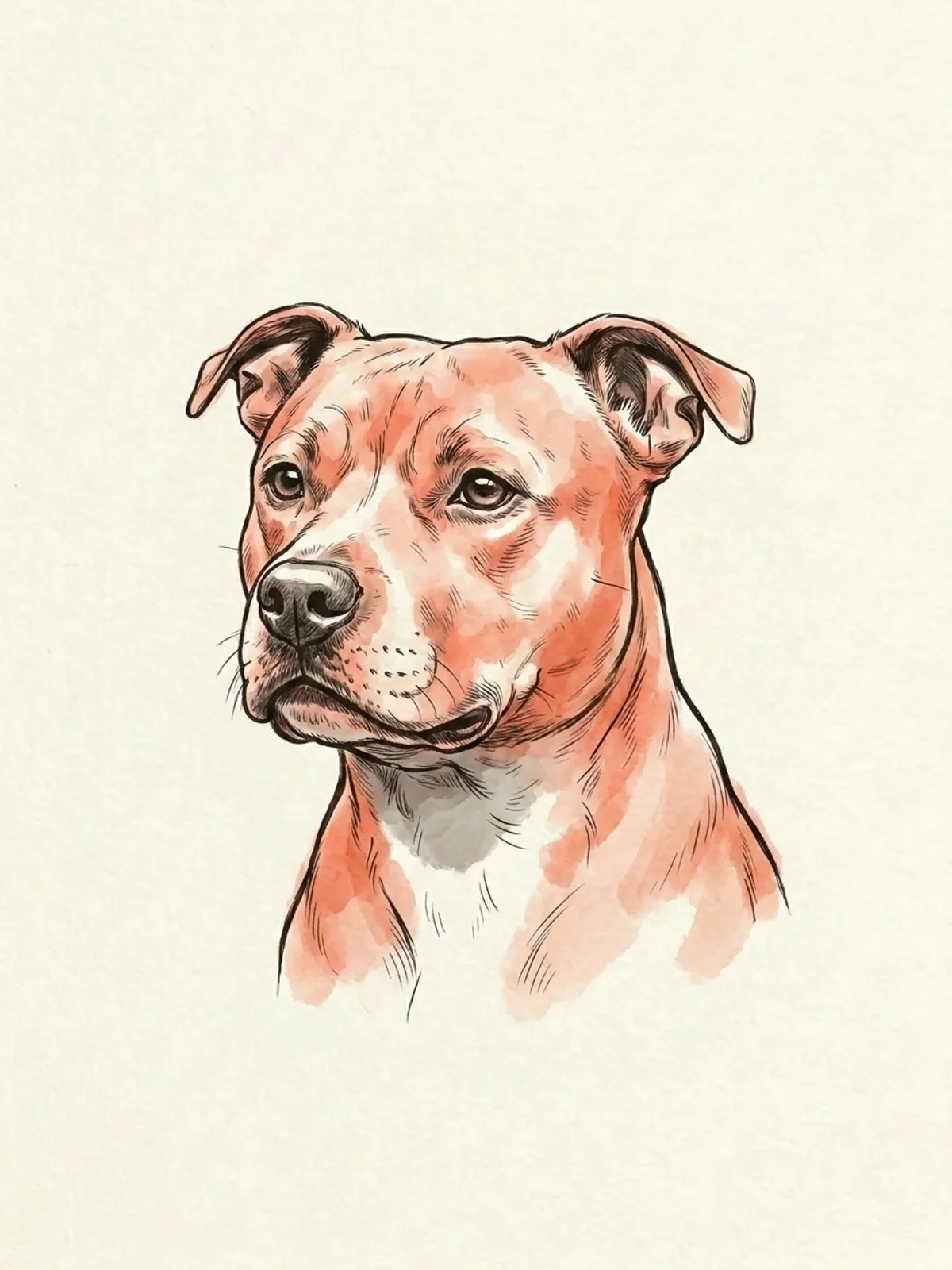
The American Pit Bull Terrier lives 12 to 16 years, which is a long run for a dog this muscular and this athletic. That upper figure beats most large breeds and sits comfortably above the all-breed average, so a healthy, well-bred APBT kept lean has a real shot at reaching its mid-teens. The range is wide because the breed is genetically diverse and lightly regulated, and the gap between a well-bred dog and a poorly bred one is large.
Key facts
- Typical lifespan: 12 to 16 years (United Kennel Club)
- Leading medical lifespan factor: chronic skin and atopic disease, which is one of the most common reasons owners seek veterinary care for the breed
- Above-average temperament: APBTs pass the American Temperament Test Society evaluation at roughly 87 percent, higher than the all-breed average
- Senior onset: around 8 to 9 years (medium-breed curve)
How long Pit Bulls actually live
Before the numbers, one point of confusion is worth clearing up. The American Pit Bull Terrier is recognised by the United Kennel Club and the American Dog Breeders Association, not by the American Kennel Club. The AKC instead registers the closely related American Staffordshire Terrier, a dog with shared ancestry and a different show standard. So you will not find an official AKC lifespan figure for the APBT itself. The UKC breed standard and breed-club health data place the working range at 12 to 16 years.
That is strong longevity for the size and build. As a medium breed weighing roughly 30 to 60 pounds, the APBT sits near or above the all-breed average lifespan of about 11 to 12 years, and well above the 8 to 10 years typical of giant breeds. Body size is the single biggest predictor of canine lifespan across breeds, and the APBT benefits from being mid-sized rather than massive. The breed’s muscularity does not shorten its life the way sheer bulk does in a Mastiff or Great Dane. Reaching the high end of the range is mostly about lean body condition, joint care, and managing the skin issues the breed is prone to.
The health factors that set the range
Skin disease is the most common chronic problem in the breed. APBTs and related bull-type terriers show high rates of canine atopic dermatitis, an allergic skin condition driven by environmental allergens, food, and flea sensitivity. A clinical overview in the Merck Veterinary Manual on atopic dermatitis describes the chronic itch, recurrent ear infections, and secondary skin infections that come with it. Atopic disease rarely kills a dog, but it drives years of discomfort and repeat vet visits, and severe cases can affect quality of life enough to influence end-of-life decisions.
Hip dysplasia is the second factor. The Orthopedic Foundation for Animals maintains breed statistics on hip joint conformation, and bull-type terriers carry a moderate dysplasia rate that responsible breeders screen against with hip radiographs. Untreated dysplasia leads to arthritis and reduced mobility in later years, which matters for a breed bred to move.
Cruciate ligament injury is a particular concern in athletic dogs. The APBT’s drive and explosive movement put real load on the knee, and cranial cruciate ligament rupture is a frequent orthopedic injury in active, muscular breeds. A surgical repair followed by months of rehab is the usual path, and dogs that tear one cruciate often go on to tear the other. Cardiac disease appears in some lines, with certain bloodlines carrying elevated risk for conditions like aortic stenosis, which is why a heart check at the vet matters more than owners often assume.
Reputation versus the temperament data
The Pit Bull’s public image is shaped largely by media coverage and breed-specific legislation rather than by behavioural measurement. When you look at the measured data, the picture shifts. The American Temperament Test Society runs a standardised evaluation that scores dogs on stability, friendliness, and reaction to stimuli. The American Pit Bull Terrier consistently passes at around 87 percent, above the all-breed average across the thousands of dogs the society has tested. The American Staffordshire Terrier and Staffordshire Bull Terrier post similarly high pass rates.
This matters for lifespan in an indirect but real way. Breed-specific legislation, insurance restrictions, and shelter overcrowding affect the breed’s outcomes, and the American Veterinary Medical Association’s literature review on breed-specific legislation concludes that breed-based bans are not supported by the evidence as an effective tool for reducing bites. The veterinary consensus points to individual dog management, not breed identity, as the factor that predicts behaviour. For an owner, the takeaway is that a stable, well-socialised APBT is the norm, and that good socialisation and training support both a calmer dog and a longer, less stressful life.
What actually extends a Pit Bull’s life
Lean body condition does more for an APBT than any supplement. Keeping the dog at a body condition score of 4 to 5 out of 9, with ribs easily felt and a visible waist, reduces joint load, lowers cruciate injury risk, and protects against the metabolic strain that obesity brings. A muscular breed already carries weight on its frame, so extra fat compounds quickly. The broader principles in our guide on how to extend your dog’s lifespan apply directly here.
For skin disease, early intervention beats chronic firefighting. Year-round flea control, a vet-guided diet trial if food allergy is suspected, and prompt treatment of ear and skin infections keep atopic dermatitis from spiralling. Many APBTs do well on modern anti-itch medications once a vet confirms the diagnosis. For joints, controlled exercise rather than weekend-warrior bursts protects the cruciate ligaments, and a hip screen before breeding keeps dysplasia out of the line.
Annual veterinary visits become twice-yearly once the dog passes 8 or 9, the point where the medium-breed curve marks the start of senior life. A baseline blood panel and a cardiac listen catch the line-specific heart issues early. Dental care, often skipped, prevents the chronic inflammation that shortens life across all breeds. The APBT shares this longevity profile with several of the longer-living medium breeds, and the same playbook of lean weight, joint care, and consistent vet contact carries the breed toward the high end of its range.
See your Pit Bull’s real age with the calculator, which uses the medium breed curve to give you a number that is actually true for your dog.