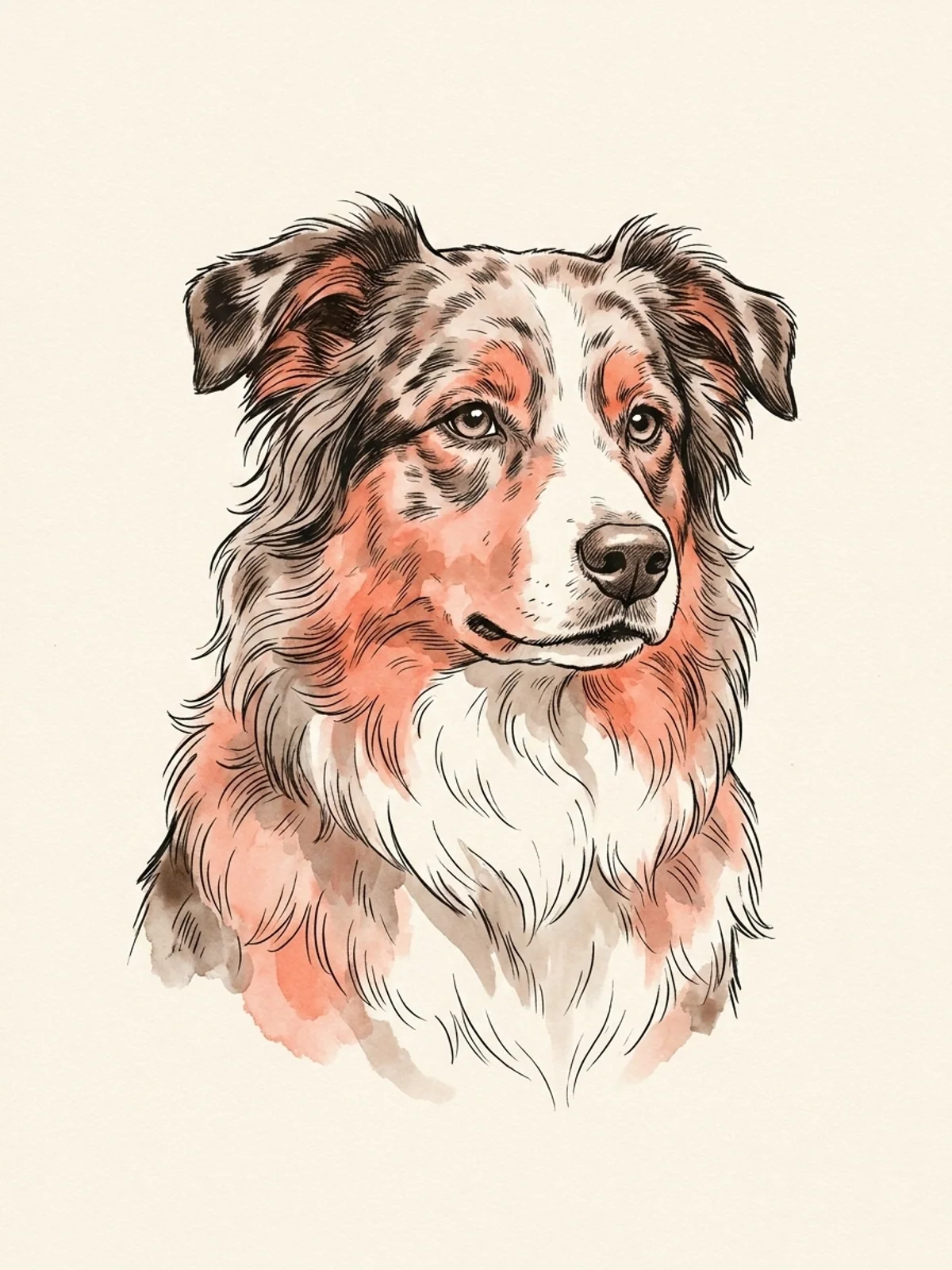
The American Kennel Club puts the Australian Shepherd’s lifespan at 12 to 15 years, comfortably above the all-breed average of about 11 years. That sits comfortably in the range you would expect from a medium-sized, athletically built dog. An Aussie who reaches 13 or 14 is not unusual, and some individuals make it past 15. The breed is not fragile, but it does carry a handful of serious inherited health risks that owners are better off knowing early.
Key facts
- Typical lifespan: 12 to 15 years (American Kennel Club); 11.61-year median in the 2017 ASHGI survey of 1,502 dogs
- Leading cause of death: cancer (about 31% of deaths, 2017 ASHGI survey), ahead of old age at 28%
- MDR1 (ABCB1-1 deletion) mutation: roughly half of all Aussies carry at least one copy
- Key inherited cancers: hemangiosarcoma and lymphoma, which cluster in the same family lines
How long Australian Shepherds actually live
The 12 to 15 year range from the AKC covers healthy, well-managed dogs. Real-world survey data lands a bit lower on average. The 2017 ASHGI Australian Shepherd Longevity Survey, which analyzed 1,502 dogs, found a median lifespan of 11.61 years and an average of 10.74 years. The survey also noted that average longevity had declined by about 8 percent comparing dogs born before 1990 to those born in 2000 to 2005, a trend the Australian Shepherd Health and Genetics Institute (ASHGI) links largely to rising cancer rates.
The gap between the AKC range and the ASHGI survey is worth understanding. Breed club figures tend to represent dogs from active, health-focused breeders. Survey data pulls from the general population, including dogs who died young from inherited disease. Neither number is wrong. Together they tell you that 12 to 15 is achievable, and that hitting the top of that range takes some luck and some deliberate management.
The MDR1 mutation and other inherited conditions
The single most important genetic fact about Australian Shepherds is the MDR1 mutation, now formally called the ABCB1-1 deletion. According to ASHGI’s MDR1 resource, roughly half of all Australian Shepherds carry at least one copy. The mutation disables a protein that normally pumps certain drugs back out of the brain. In affected dogs, medications that are routine in other breeds can build up to toxic levels and cause serious neurological illness or death.
The drugs that matter most are ivermectin at high doses (standard heartworm-dose ivermectin is generally safe), the tranquilizer acepromazine, and loperamide (Imodium). A DNA test identifies carriers and only needs to be run once. ASHGI recommends testing every Aussie and keeping the results on file to share with any veterinarian who treats the dog, including emergency vets.
Epilepsy and hip dysplasia round out the short list of conditions worth knowing about. The 2017 ASHGI longevity survey found epilepsy was one of the three leading reasons dogs aged 5 to 10 were euthanized, accounting for a meaningful share of early deaths. Hip dysplasia rates have not improved over time according to the 2010 ASHGI Breed Health Survey, which flagged it as a persistent concern across the breed.
Cancer and eye conditions
Cancer is the leading cause of death in Australian Shepherds. The 2017 ASHGI longevity survey found it responsible for about 31 percent of deaths in the study population, outpacing old age (28 percent) as the most common cause. Hemangiosarcoma and lymphoma are the two inherited cancers most strongly associated with the breed. ASHGI’s cancer research established that both cancers tend to cluster in the same family lines, suggesting a shared genetic component. Hemangiosarcoma rates in Aussies have increased substantially since the 1990s.
Eye conditions add a separate layer of risk. A 2025 study in PMC (NCBI) on hereditary eye disorders in predisposed breeds confirmed that collie eye anomaly (CEA) and progressive rod-cone degeneration (PRCD, the form of progressive retinal atrophy found in Aussies) both have DNA tests available. CEA is present at birth and does not progress, so a mildly affected dog may retain good vision for life. PRCD does progress, typically leading to blindness over months to years. ASHGI’s eye health pages recommend annual eye exams through a board-certified veterinary ophthalmologist for all breeding dogs and strongly encourage pre-purchase eye testing in puppies.
What owners can actually do
Knowing the risk profile of the breed is the first step. Acting on it early matters more, and the general principles of extending a dog’s lifespan apply on top of the breed-specific items below.
- Test for MDR1 before the first vet visit if you have a new puppy or a dog with unknown history. The test costs around $50 to $70, runs once, and can prevent a fatal drug reaction at any point in the dog’s life.
- Ask your vet about hip evaluations around age 1 to 2. The Orthopedic Foundation for Animals (OFA) provides hip evaluation through radiographs, and early findings let you manage exercise and weight to slow progression.
- Schedule annual eye exams with a veterinary ophthalmologist, particularly in the first few years. Catching CEA or early PRCD before symptoms appear gives you time to plan.
- Keep cancer in view as your Aussie ages. Hemangiosarcoma can develop quickly and with few early symptoms. Regular wellness exams every 6 months after age 7, including abdominal palpation and discussion of any new lumps, give the best odds of early detection.
- Maintain a healthy weight and consistent exercise routine throughout the dog’s life. The breed is built to work, and Aussies who stay active generally stay healthier longer.
See your Australian Shepherd’s real age with the calculator , which uses the medium breed curve to give you a number that is actually true for your dog.