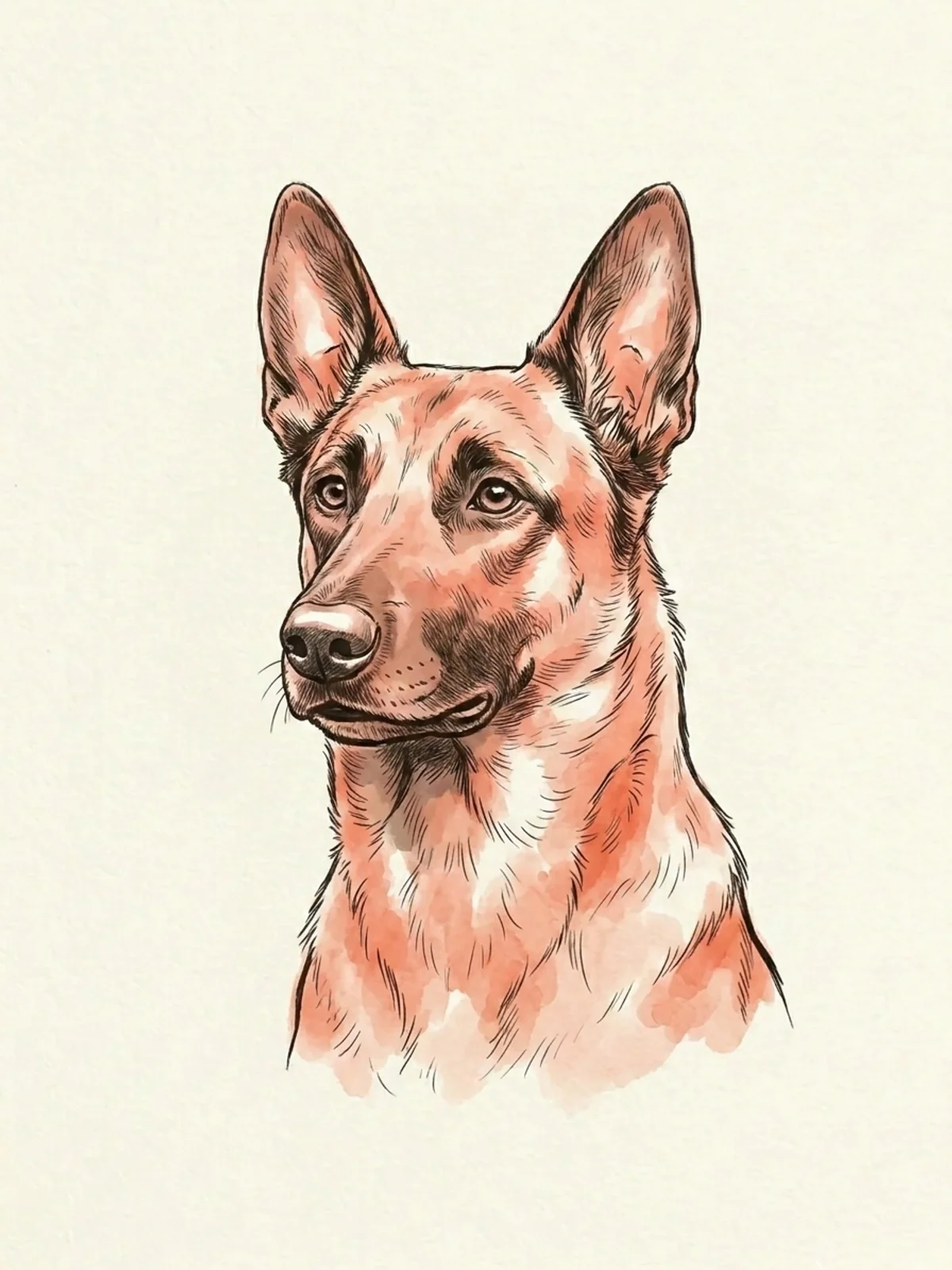
The Belgian Malinois lives 14 to 16 years according to the American Kennel Club breed profile, which is striking for a dog this size. A 30-kilogram working dog has no business living as long as a Beagle, and yet the Malinois routinely does. The breed sits at the top of the large-dog longevity table and stays there because the people building these dogs have been selecting for function rather than appearance for most of the last century.
Key facts
- Typical lifespan: 14 to 16 years (American Kennel Club), roughly three to five years longer than the German Shepherd at the same body weight
- Long life traces to working-line selection: hip dysplasia rates sit well below German Shepherds (OFA breed statistics)
- Cancer rates are notably low; the breed lacks the hemangiosarcoma and osteosarcoma loads of Golden Retrievers and Rottweilers
- Dominant risk is behavioural: under-stimulated dogs are surrendered or euthanized over bite history, not biology
How long Belgian Malinois actually live
The Malinois is one of four Belgian shepherd varieties, alongside the Tervuren, Groenendael, and Laekenois, all named after Belgian towns. The Malinois takes its name from Malines, the French rendering of Mechelen. The American Belgian Malinois Club lists a working life that often extends past 14, and breeders with active sport and police lines frequently report dogs going to 15 or 16 with no major decline until the final months.
That puts the breed on a different curve from almost every other dog its size. A typical large breed averages 10 to 12 years, close to the all-breed average of about 11. The Malinois averages closer to 14, which is medium-breed territory. Among working breeds of similar build, only a handful approach this, which is why the Malinois shows up near the top of any honest list of the longest-living dog breeds when size is factored in.
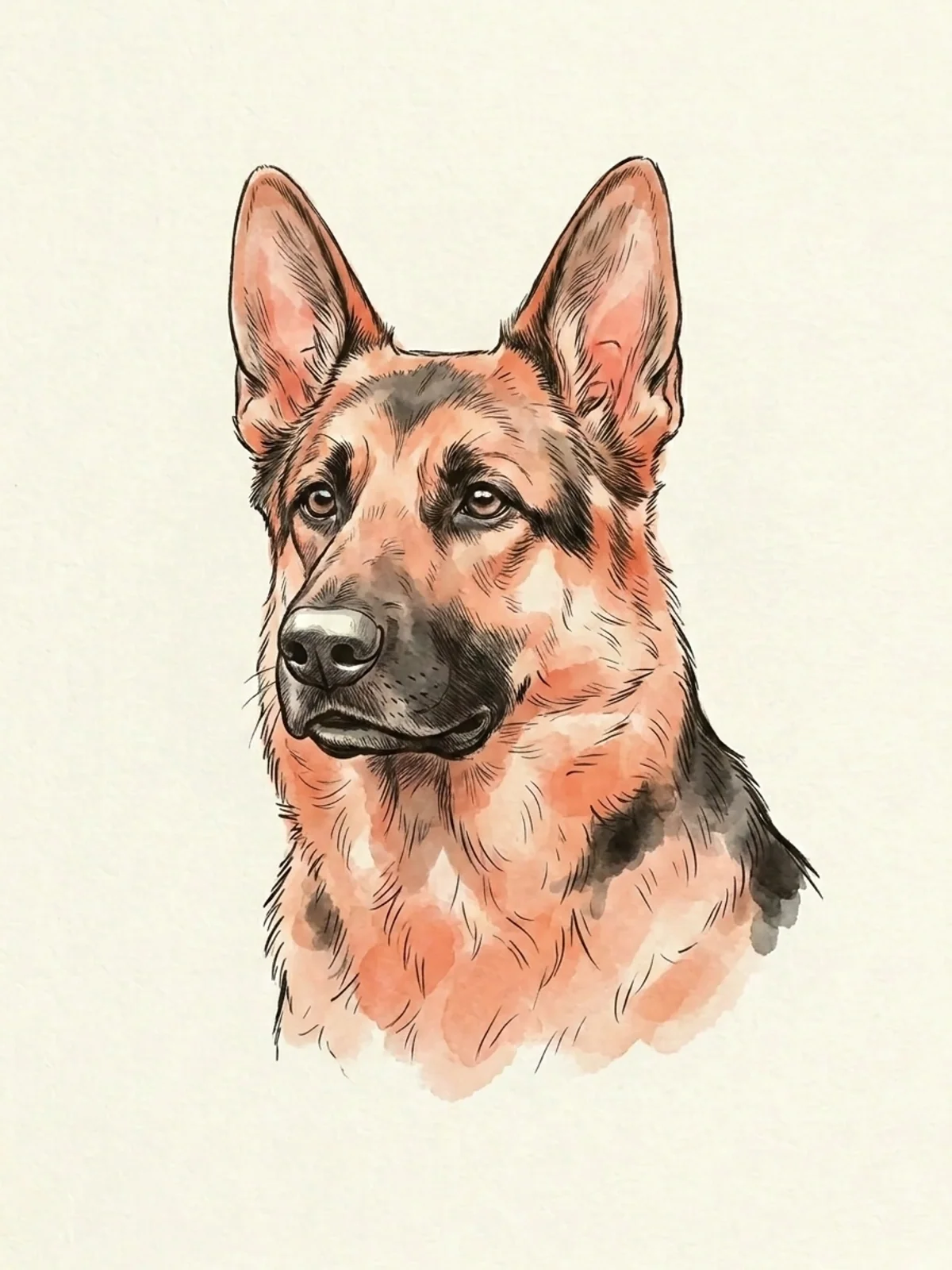
The contrast with the German Shepherd is the part most people miss. The two breeds share a rough silhouette, a similar working history, and overlapping jobs in police and military service. The German Shepherd averages 9 to 13 years and carries a heavy load of orthopaedic and degenerative disease. The Malinois, at the same body weight and workload, lives three to five years longer on average. The breeds diverged because their breeding cultures diverged.
Why working-line selection produces longer lives
Most Malinois you see today come from working lines. Police and military programmes, ring sport clubs, and Schutzhund competitors buy the majority of puppies, and they buy on the basis of nerve, drive, recovery, and structural soundness. A dog that breaks down at age four does not get bred. A dog that wins national-level competition at age seven does. The selection pressure runs in the direction of long working careers, which translates directly into long lives.
Show-line breeding optimises for a different thing. Coat, angulation, and ring presence get rewarded even when the underlying joint or temperament is compromised. This is the gap that opened up in the German Shepherd over several decades, and it shows up in the data. A 2017 paper on working-line versus show-line German Shepherd health found measurably better hip scores and lower rates of degenerative myelopathy in working populations than in conformation populations of the same breed. The Malinois never went through that split. There is no significant show population pulling the breed away from function.
The Orthopedic Foundation for Animals breed statistics tell the same story in joint numbers. Malinois hip dysplasia rates sit well below the rates reported for German Shepherds. Elbow rates are low. The breed is not perfect, but the structural foundation is unusually clean for a dog of this size and intensity.
The health concerns that exist
Hip and elbow dysplasia still appear, and any responsible breeder will provide OFA or PennHIP results on both parents. Epilepsy runs in some lines and tends to present between ages one and three. Anaesthesia sensitivity is reported, related to the same lean body composition that makes the breed athletic. Cataracts and progressive retinal atrophy turn up at low frequency.
Cancer rates are notably lower than in most large breeds. The Malinois does not carry the haemangiosarcoma or osteosarcoma loads that shape the lifespan of breeds like the Golden Retriever or Rottweiler. When a Malinois dies of old age, it is more often a kidney or general decline than a specific tumour.
The dominant problem in this breed is behavioural rather than medical. A Malinois bred to take down a fleeing suspect does not become a casual house pet because it lives in a suburb. Under-stimulated dogs develop severe anxiety, redirected aggression toward family members, compulsive behaviours, and chronic stress. Rescue organisations have seen a sharp rise in surrendered Malinois over the last decade, often from owners who watched a Navy SEAL documentary and decided they wanted the breed without understanding what one actually requires. Cairo, the Malinois on the bin Laden raid, is the wrong reference point for choosing a family dog.
A Malinois needs structured work for one to two hours a day, every day, for its entire life. Without it the dog suffers and the household suffers with it. The behavioural failures shorten lives indirectly through euthanasia for bite history, not through any biological mechanism.
What actually extends a Malinois’s life
The first decision is whether to get one at all. If you cannot commit to daily training and physical work at a serious intensity, choose a different breed. The dog will live longer in someone else’s home.
The second is a working-line breeder with hip, elbow, and eye clearances on the parents and a track record of dogs that competed or worked into late middle age. Pet-line Malinois bred for colour or temperament shortcuts often inherit neither the soundness nor the longevity of the working population.
The third is body condition. Keep the dog at body condition score 4 on the 9-point scale, which for a Malinois means visible waist, palpable ribs with a thin fat cover, and an obvious abdominal tuck. This breed should look athletic, not lean in a starved way and never soft. Lifelong leanness is the single most reliable longevity intervention across every strategy for extending a dog’s life.
See your Malinois’s real age with the calculator, which uses the large breed curve to give you a number that is actually true for your dog.