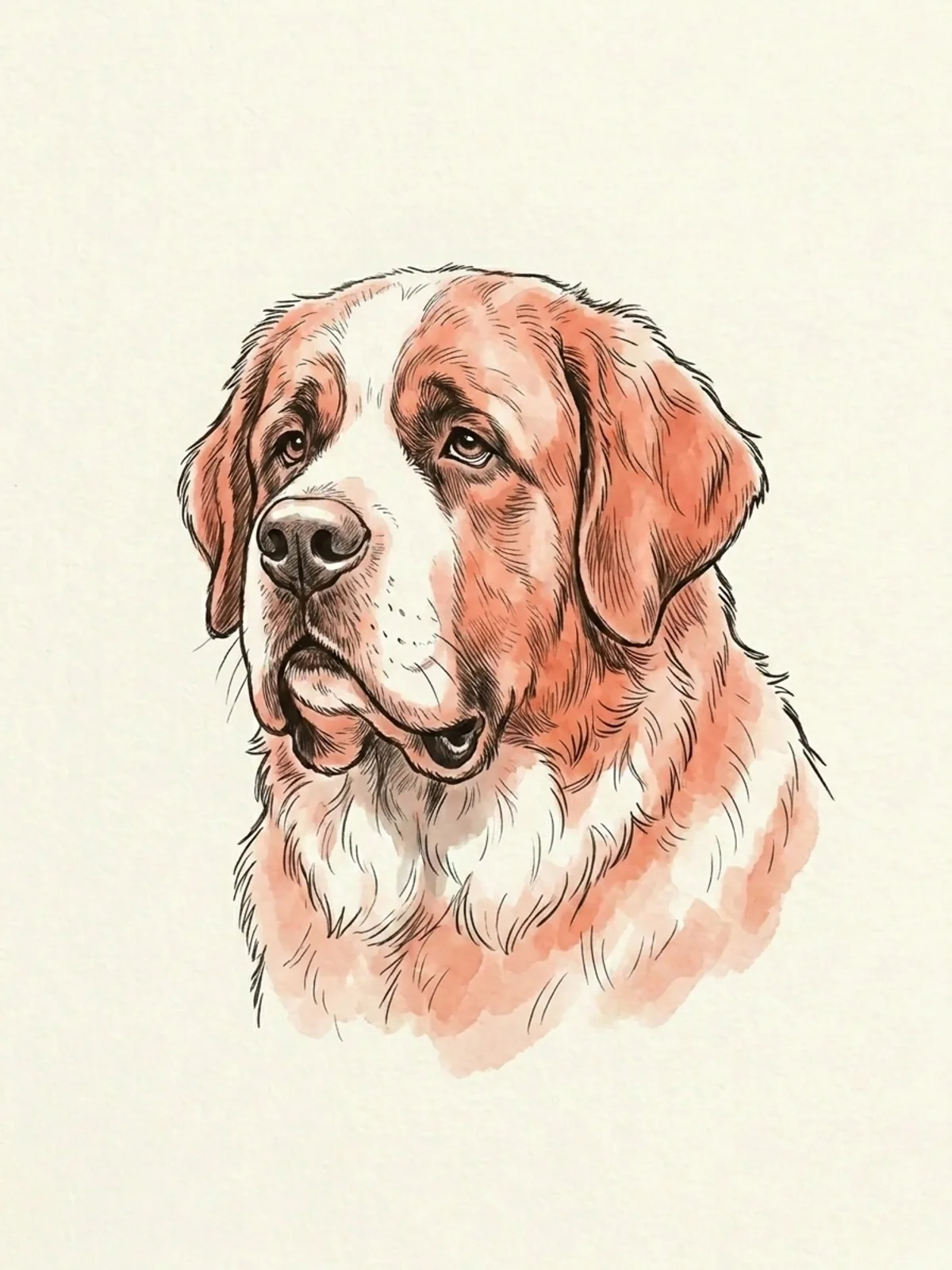
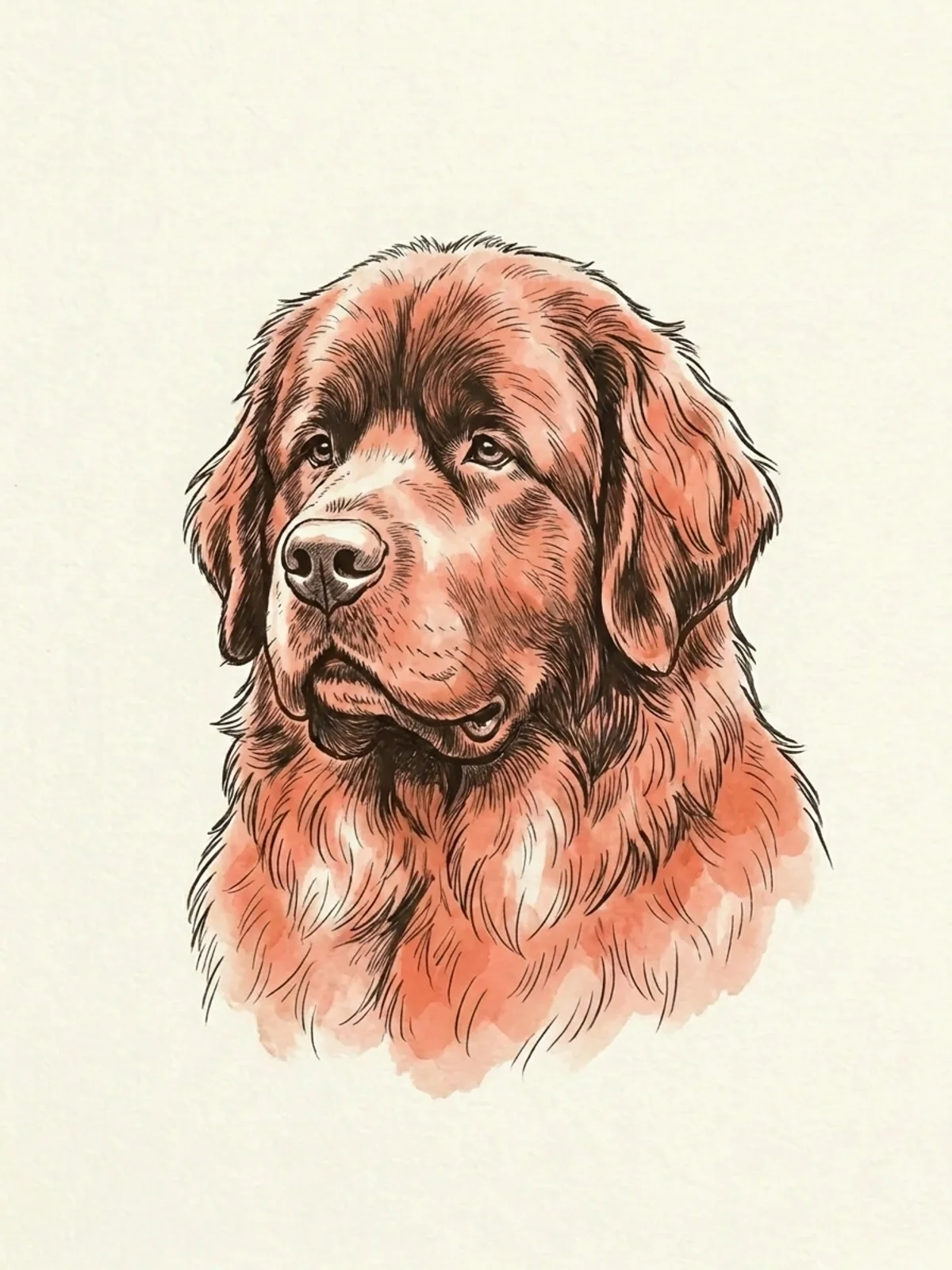
Saint Bernards live 8 to 10 years on average. That puts them among the shortest-lived popular breeds, which is the trade-off you accept for a dog the size of a small pony. The breed was developed by monks at the Great St Bernard Hospice, the high pass between Switzerland and Italy, to find travellers buried in alpine snow and dig them out. A dog named Barry, working the pass in the early 1800s, is credited with saving around forty lives, and he is still the reason most people picture this breed standing guard over a snowdrift. The brandy barrel on the collar, for what it is worth, was a Victorian painter’s invention rather than anything the monks ever used.
Key facts
- Typical lifespan: 8 to 10 years (American Kennel Club)
- Among the highest-risk breeds for bloat / gastric dilatation-volvulus (Glickman et al., JAVMA)
- Hip and elbow dysplasia, dilated cardiomyopathy, and osteosarcoma are the major orthopaedic and cardiac threats (Saint Bernard Club of America)
- Senior onset: around 5 to 6 years (giant-breed curve)
How long Saint Bernards actually live
The American Kennel Club Saint Bernard profile lists the expected lifespan at 8 to 10 years, and breed club surveys and insurance data over the past two decades have not budged that figure much. A Saint who reaches 11 is doing well. Twelve is rare enough that owners remember the dog by name for the rest of their lives.
For context, our average dog lifespan guide places the typical pet dog around 11 to 13 years once you blend every size together. Saint Bernards sit three or four years under that midpoint, and the gap is almost entirely about mass. A 2022 GeroScience study of more than forty thousand dogs found that mean breed lifespan drops by roughly 25.6 days for every extra kilogram of body weight, which adds up to a difference of about 4.5 years between the smallest and largest breeds. A Saint sits at the heavy end of that line.
If you want to see where the breed lands against the rest of the giant cohort, the shortest-living dog breeds guide ranks them alongside the Great Danes, mastiffs, and Newfoundlands they share a waiting room with.
Bloat and the giant-breed emergencies
The single condition most likely to end a Saint Bernard’s life early is bloat, known clinically as gastric dilatation-volvulus, or GDV. The stomach fills with gas and then twists on itself, cutting off blood flow and going from a healthy dog to a dead one in a matter of hours. Deep-chested giant breeds are the classic victims, and the Saint Bernard Club of America is blunt about it on its care guidance for owners, calling gastric torsion a major killer in Saints.
The veterinary numbers back that up. A long-running Purdue study of GDV in large and giant breeds, published by Glickman and colleagues in JAVMA, tracked eleven high-risk breeds including the Saint Bernard and pinned down the things owners can actually change. Counterintuitively, a raised feeding bowl turned out to account for roughly 52 percent of GDV cases in giant breeds, the opposite of the advice many owners were given for years. Eating quickly, a single large daily meal, advancing age, and a family history of bloat all raised the odds as well.
What this means in practice is straightforward. Feed two or three smaller meals from a bowl on the floor, slow a fast eater down with a puzzle feeder, and skip hard exercise for an hour either side of a meal. Learn the early signs cold: a dog that retches without bringing anything up, a swelling belly, pacing, and obvious distress. And have the conversation about a prophylactic gastropexy, a procedure that tacks the stomach to the body wall so it cannot twist. Many vets do it at the same time as a spay or neuter, and for this breed it is one of the highest-value decisions you can make.
Joints, heart, and heat
Bloat is the emergency, but the slower problems do plenty of damage too. Hip and elbow dysplasia are close to a given in a dog carrying 120 to 180 pounds, which is why any breeder worth buying from can show you OFA hip and elbow scores on both parents. A puppy from unscreened stock is a gamble you are paying for in arthritis years down the line.
The heart is the next concern. Dilated cardiomyopathy, in which the heart muscle weakens and the chambers enlarge, shows up in large and giant breeds and can stay silent until it is advanced. A yearly listen from your vet, and an echocardiogram if anything sounds off, is how it gets caught while there is still something to do. Osteosarcoma, the aggressive bone cancer that haunts big breeds, is the other shadow over the size class; the same biology that makes a dog tall makes its bones a more likely site for the disease.
Then there is heat. That magnificent double coat was built to hold body warmth on a freezing mountain pass, and it does the job far too well in July. A Saint Bernard overheats at temperatures a Labrador strolls through. Air conditioning, shade, constant water, and walks scheduled for the cool ends of the day are basic husbandry here, not pampering.
What actually extends a Saint Bernard’s life
The interventions that move a Saint from eight years toward eleven are unglamorous and consistent. Keep the dog lean, because every spare pound on a frame this size grinds the joints faster and loads an already strained heart. Feed a large or giant breed puppy formula through the growth window so the skeleton matures at a controlled pace rather than racing ahead of itself.
Get the gastropexy, learn the bloat signs, and move to twice-yearly vet visits once the dog turns five, since a giant breed cannot afford to wait twelve months between the exams that catch a heart murmur or a slowing gait. For the full lifestyle framework, the how to extend your dog’s lifespan guide covers diet, dental care, and the rest of the quiet work that adds months.
A Saint Bernard hands you fewer years than most dogs will. The ones it does give you arrive at full size, full heart, and full devotion, and that is the bargain the breed has always offered.
See your Saint Bernard’s real age with the calculator, which uses the giant breed curve to give you a number that is actually true for your dog.