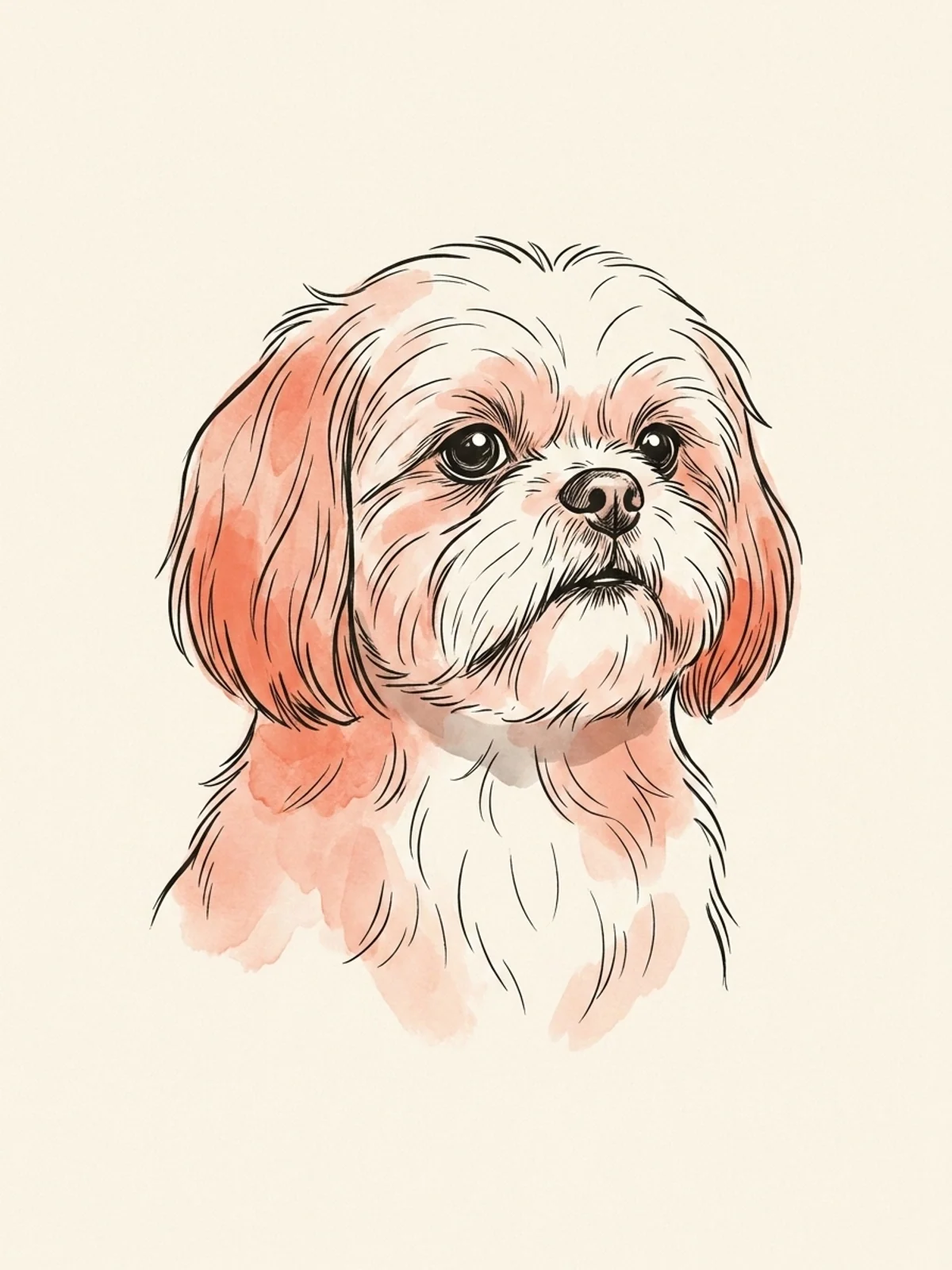
Shih Tzus live 10 to 18 years, comfortably above the all-breed average of about 11 years. That is an eight-year span. Most breeds get listed at 3 or 4 years of range, so this is unusual. It reflects two populations that could not look more different on paper: dogs bred carefully from health-tested lines with well-managed airways, and dogs from puppy mills carrying chronic respiratory disease and no health history at all. Both are called Shih Tzus. Their outcomes diverge sharply.
Key facts
- Typical lifespan: 10 to 18 years (American Kennel Club), one of the widest ranges of any small breed
- Primary health risk: Brachycephalic Obstructive Airway Syndrome (BOAS), treatable in most affected dogs
- Inherited concern: renal dysplasia, which can cause kidney failure before age five in severe cases
- High end: well-bred dogs with open airways and lean body condition can reach 16 to 17 years
A lifespan range unlike most small breeds
The AKC Shih Tzu breed profile lists 10 to 18 years, which matches what veterinarians and breed clubs consistently report. Reaching 10 is not an achievement for this breed. Reaching 16 or 17 is unusual but well documented.
Part of the hardiness story is historical. Shih Tzus were bred for roughly 1,000 years in Chinese imperial courts, selected for temperament and companionship rather than speed or herding. They are one of the oldest toy breeds in existence. A thousand years of selection toward calm indoor dogs is a long time to weed out the obvious problems, and it shows in how the breed ages when its specific health risks are managed.
The width of that 10-to-18 range matters for how you read it. When someone says “Shih Tzus live 10 to 18 years,” the honest interpretation is that the low end reflects dogs with uncorrected breathing problems or poor breeding, while the high end reflects what is possible with well-bred dogs in attentive homes. Your individual dog’s ceiling depends on which of those starting points applies.
Brachycephalic health and how it affects lifespan
Flat-faced breeds carry a structural challenge called Brachycephalic Obstructive Airway Syndrome, or BOAS. The skull shape compresses the airway: the nostrils may be too narrow, the soft palate too long, and the throat too tight. Dogs with severe BOAS work harder to breathe on every breath, every day, for their entire lives.
That chronic physical stress has consequences. Severely affected dogs sleep poorly, overheat faster, and develop secondary heart and lung problems earlier than their well-bred counterparts. A Shih Tzu with significant uncorrected BOAS is more likely to land on the lower end of that lifespan range.
The other side of this is equally true. Mild cases, especially in dogs from breeders who select for open nostrils and healthy airway anatomy, can be managed well enough that the condition barely affects daily life. A Shih Tzu with good baseline anatomy who avoids exercise in heat and is kept at a healthy weight can live 16 years or more. Corrective surgery for BOAS, when performed early (typically around 12 to 18 months), has been shown to improve long-term quality of life in affected dogs, per BOAS research from the University of Cambridge Veterinary School. BOAS is treatable in most dogs that have it; it does not have to set the ceiling on a dog’s life.
The practical takeaway for prospective owners is simple. Ask the breeder about airway health specifically. Look at the dog’s nostrils. A Shih Tzu whose nostrils are visibly open, who does not snore loudly at rest, and who recovers quickly after mild exercise has a fundamentally different health outlook than one who struggles.
What shortens a Shih Tzu’s life
Breathing problems get the most attention, but three other factors account for a meaningful share of early deaths in this breed.
Renal dysplasia is an inherited kidney condition that can cause kidney failure in young dogs. It is more common in Shih Tzus than in most small breeds. The condition varies in severity. Mild cases may not shorten life significantly, while severe cases can cause kidney failure before age five. Responsible breeders screen for it; ask for the parents’ health clearances.
Eye injuries are a particular risk because Shih Tzu eyes are prominent and sit close to the surface. A scratch that would be minor in a dog with deeper-set eyes can cause significant damage here. The Shih Tzu Club of America recommends daily eye checks and prompt veterinary attention for any redness, cloudiness, or squinting. Untreated corneal injuries can lead to permanent vision loss, which compounds other age-related decline.
Obesity in middle age is the quietest life-shortener. Small dogs accumulate excess weight easily, and owners of affectionate, sedentary breeds often mistake food-seeking behavior for hunger. A Shih Tzu at even one kilogram above healthy weight carries that load on joints and a cardiovascular system not sized for it. By age seven or eight, the cumulative effects show up in mobility and energy levels.
What lengthens a Shih Tzu’s life
Beyond the breed-specific concerns above, the general principles of extending a dog’s lifespan apply, and dental care matters more for this breed than most owners realize. Small dogs accumulate tartar faster than large breeds, partly due to tooth crowding in a smaller jaw. Periodontal disease allows bacteria into the bloodstream and has been linked to kidney and heart damage over time, per the American Veterinary Dental College. Tooth brushing three to four times a week, or at minimum annual professional cleanings, genuinely extends life.
Keeping weight lean is the other major factor. Shih Tzus past age ten who are lean and still moderately active routinely reach 14 to 16. The dogs that struggle to reach 12 are often the ones that were overweight through their middle years. Feed by body condition, not by the bag, and adjust as the dog slows down with age.
Exercise needs to be appropriate, not strenuous. Short walks twice daily keep the cardiovascular system active without stressing the airway or joints. In hot or humid weather, keep exercise to early morning or evening. A Shih Tzu left to overheat activates the exact respiratory cascade BOAS makes dangerous.
The Shih Tzus that reach 16 or 17 are almost always dogs with good genetics, open airways, and lean body condition through midlife, in homes that brushed teeth and noticed eye problems early. None of that is heroic. It is just the boring stuff, done for a long time.
See your Shih Tzu’s real age with the calculator, which uses the small breed curve to give you a number that is actually true for your dog.