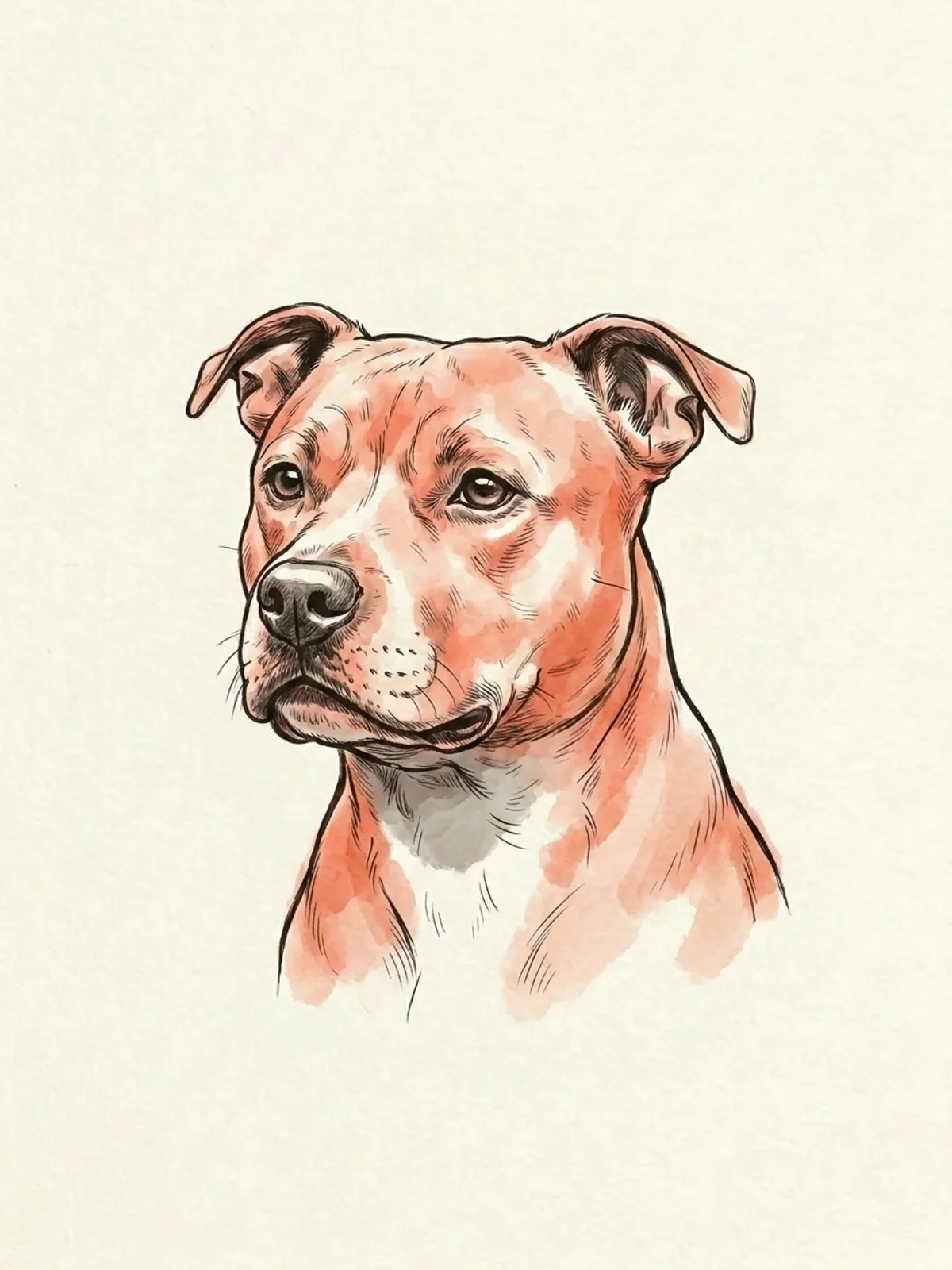
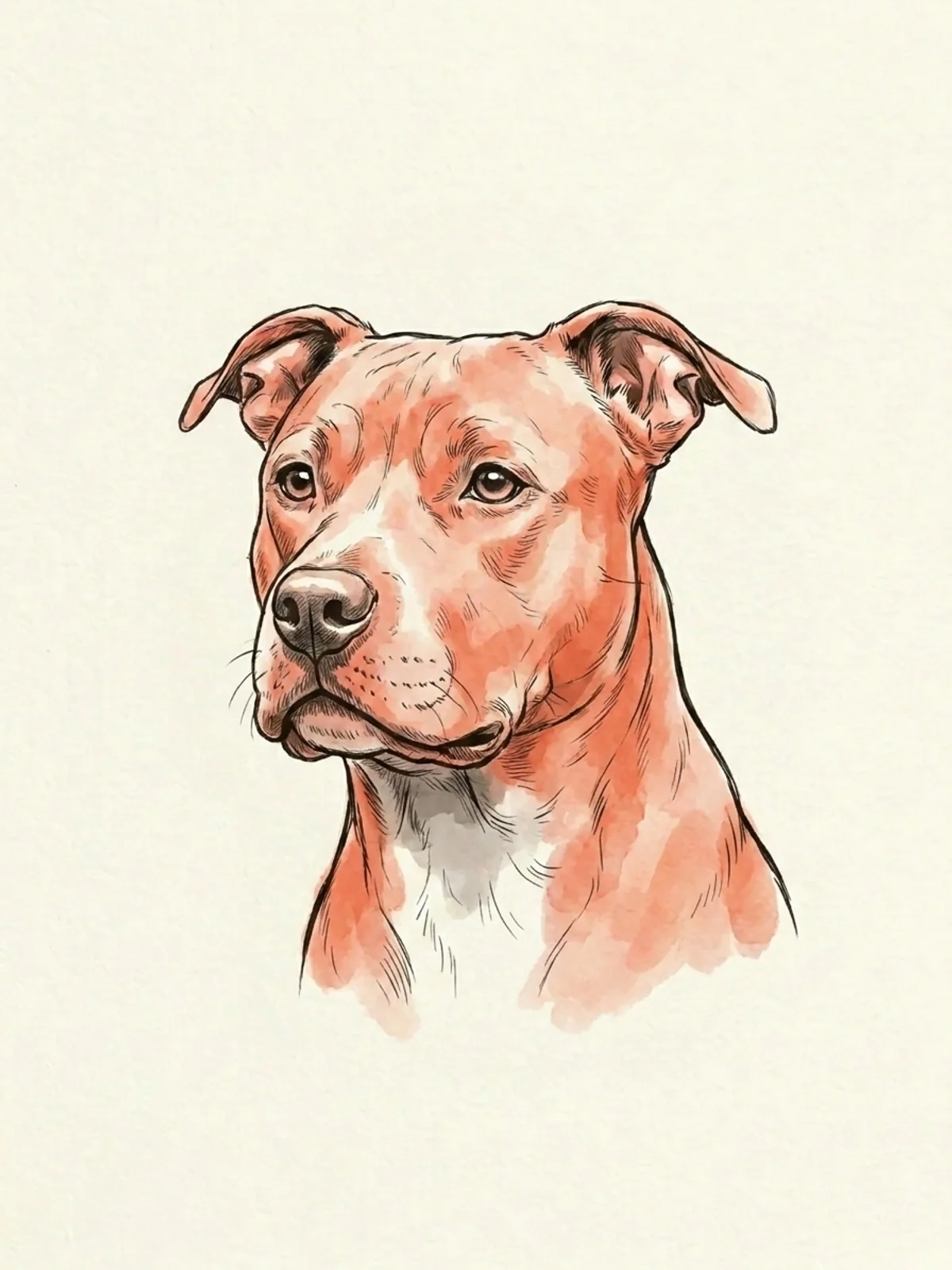
The Staffordshire Bull Terrier lives 12 to 14 years, which is a solid run for a dog built this thick and this strong. That puts the Staffie at or just above the all-breed average and well ahead of the giant breeds, so a healthy, well-bred dog kept lean has a good shot at reaching its early teens. One quick point before the numbers: the Staffie is a British breed and is not the American Staffordshire Terrier or the American Pit Bull Terrier, two larger American cousins it is often confused with.
Key facts
- Typical lifespan: 12 to 14 years (American Kennel Club)
- Two DNA-testable inherited conditions, hereditary cataract and L-2-hydroxyglutaric aciduria, that responsible breeding has sharply reduced (Royal Kennel Club)
- Above-average for size: the Staffie sits near the all-breed lifespan figure of about 11 to 12 years
- Senior onset: around 8 to 9 years (medium-breed curve)
How long Staffies actually live
The Staffordshire Bull Terrier comes from the Black Country of the English Midlands, bred down from old bull-and-terrier stock into a compact, affectionate family dog. Its gentle, patient nature with children earned it the old nickname of “nanny dog,” and that temperament is part of why the breed is so popular in Britain. None of this is shared with the American Staffordshire Terrier or the American Pit Bull Terrier, which are separate, heavier breeds. The Staffie is the small one, usually 24 to 38 pounds.
That size is good news for longevity. As a medium breed, the Staffie sits at or above the all-breed average lifespan of roughly 11 to 12 years, and comfortably above the 8 to 10 years typical of giant dogs. Body size is the strongest single predictor of how long a dog lives, and the Staffie benefits from being densely built rather than large. Its muscle does not shorten its life the way sheer bulk does in a Mastiff. Reaching the top of the 12 to 14 year range comes down to lean weight, joint care, and the genetics behind the two conditions that define the breed’s health story.
The two inherited conditions that matter
For most breeds, the genetics section is a list of worries. For the Staffie it is closer to a success story. Two serious inherited diseases run in the breed, and both now have reliable DNA tests, which has changed the picture for puppy buyers.
The first is hereditary cataract, caused by a mutation in the HSF4 gene. Affected dogs develop cataracts in both eyes very early, often diagnosable by 8 to 12 weeks of age, and without surgery they can go blind by the age of three. The Royal Kennel Club’s HC-HSF4 DNA test page lists the Staffordshire Bull Terrier among the affected breeds and describes how the recessive mutation works. Because it is recessive, a dog needs two copies to be affected, so testing both parents prevents affected puppies entirely.
The second is L-2-hydroxyglutaric aciduria, or L2HGA, a metabolic disorder where the dog cannot break down an organic acid that then builds up in the brain and spinal fluid. It causes seizures, tremors, wobbliness, and behaviour changes, usually appearing between six months and a year of age. The condition was first described in this exact breed in a 2003 study in the Journal of Veterinary Internal Medicine, which identified affected Staffies as the first animal model of the disease. Like HC, L2HGA is recessive, and a DNA test has been available since the mid-2000s.
Here is why it matters. Both tests let breeders mate carriers to clear dogs and still avoid producing an affected puppy, which keeps these diseases out of litters without throwing away good breeding lines. A buyer who asks for clear results on both parents removes nearly all risk of either condition. That kind of clean win is rare in dog genetics, and it is the main reason a modern, well-bred Staffie starts life with a genetic deck stacked in its favour.
The other health considerations
Beyond the two big inherited diseases, the Staffie carries a few of the usual medium-breed concerns. Skin allergies are common, and atopic dermatitis, an itchy, recurring allergic condition, drives a fair share of vet visits for the breed. It rarely shortens life directly but can mean years of managed discomfort if it goes untreated.
Mast cell tumours, a type of skin cancer, also appear at elevated rates, which is why any new lump that grows or changes should be checked promptly rather than watched. Caught early, many are treatable. Hip dysplasia rounds out the list. The Staffie’s powerful frame puts load on the joints, and a poorly formed hip leads to arthritis and reduced mobility in later years, so screened breeding stock and lean body weight both help.
None of these are unique to the breed, and none of them shave years off the way an unscreened inherited disease would. They are the ordinary maintenance items of a sturdy medium dog, and managing them well is what keeps a Staffie comfortable through its senior years.
What actually extends a Staffy’s life
Lean body condition does more for a Staffie than anything else an owner controls. The breed puts on muscle and fat readily, and a heavy Staffie loads its hips, strains its heart, and ages faster. Keeping the ribs easy to feel and a waist visible from above is the single highest-value habit, and the broader playbook in our guide on how to extend your dog’s lifespan builds on exactly that.
The genetics advice is simple: buy from a breeder who DNA tests both parents for HC and L2HGA and shows you the results. The science backs this up. A 2011 review on DNA testing and domestic dogs in Mammalian Genome concludes that tests for recessive mutations like these can reliably guide breeding decisions and reduce disease when both parents are tested. For a Staffie, that one question to a breeder removes the breed’s two worst inherited risks.
After that, the routine is ordinary and it works. Year-round flea control and prompt treatment keep skin allergies in check. A monthly hands-on check for lumps catches mast cell tumours early. Vet visits move from yearly to twice yearly once the dog passes 8 or 9, the start of senior life on the medium-breed curve, and dental care prevents the low-grade inflammation that quietly shortens lives across every breed. The Staffie shares this longevity profile with several of the longer-living medium breeds, and the same lean, screened, well-maintained approach carries it to the upper end of its range.
See your Staffy’s real age with the calculator, which uses the medium breed curve to give you a number that is actually true for your dog.