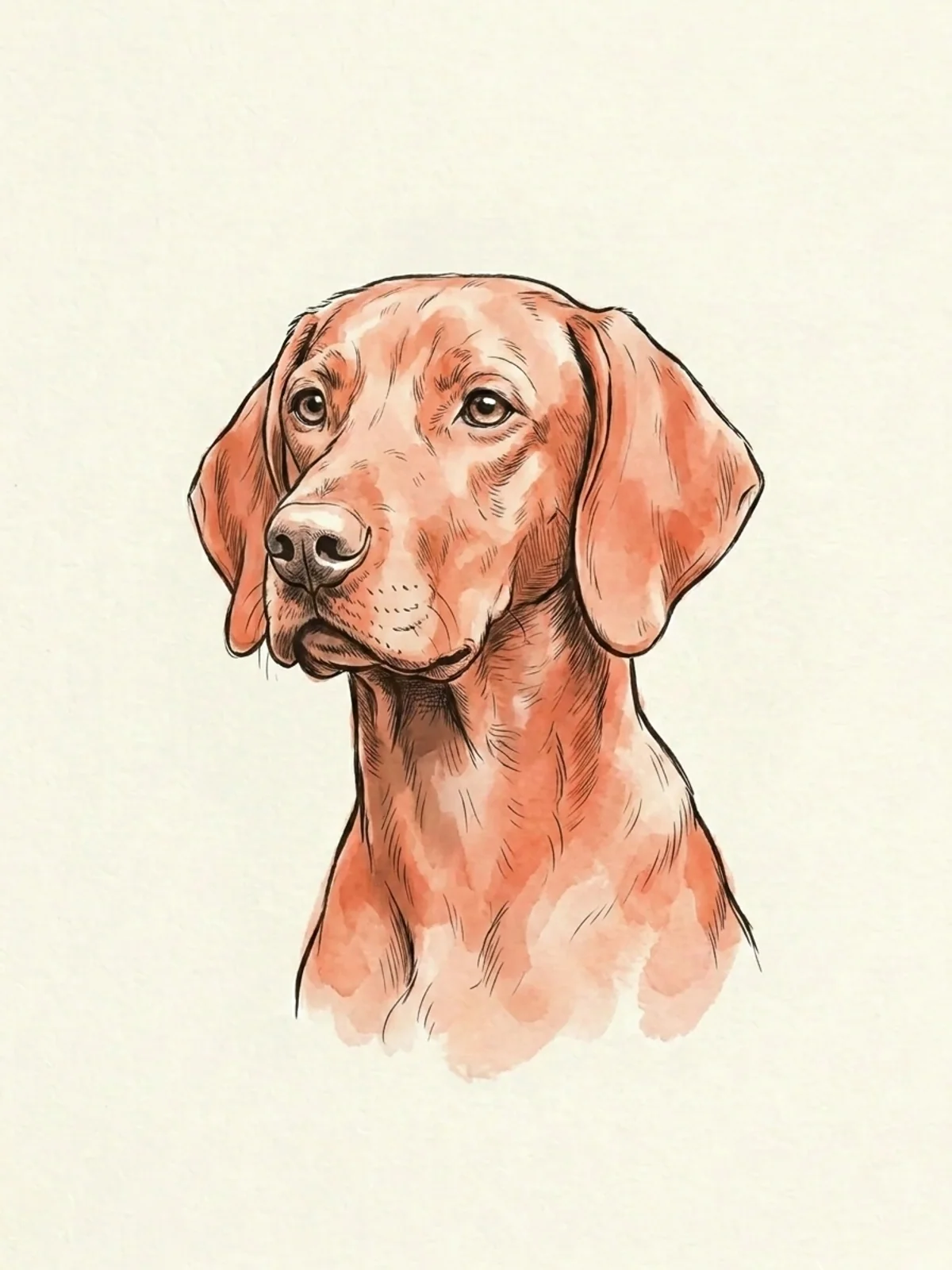
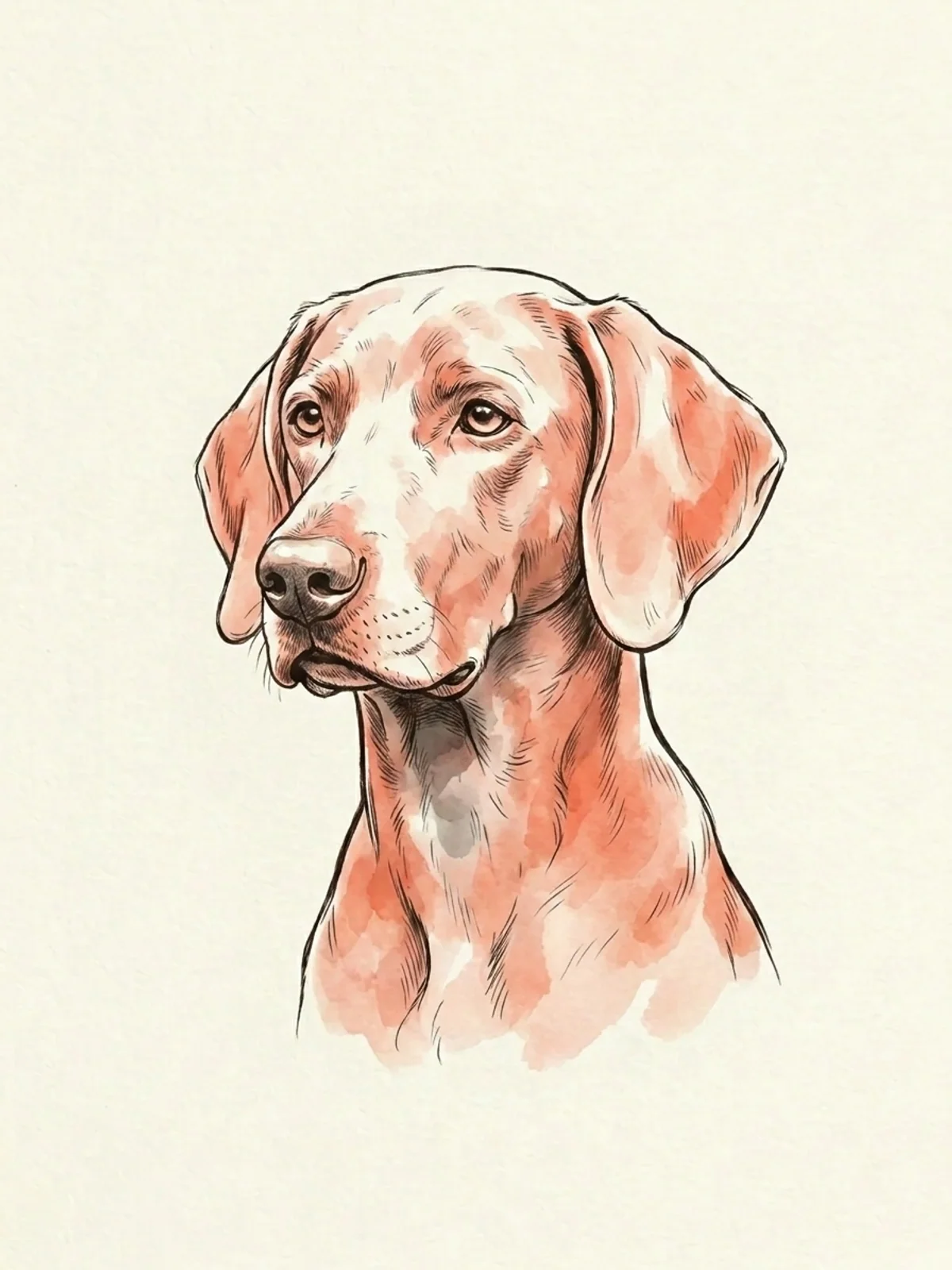
The AKC lists the Vizsla at 12 to 15 years, which is a surprisingly long run for a medium-large sporting breed. Most dogs in the 20 to 30 kg range top out closer to 11 or 12. Vizslas pull ahead because their inherited orthopaedic profile is unusually clean. The thing that decides whether your dog hits 13 or 15 is almost always cancer. That single variable does more work than diet, weight, or exercise combined, and it deserves the bulk of the attention here.
Key facts
- Typical lifespan: 12 to 15 years (American Kennel Club), with a median around 13
- Leading cause of death: cancer, accounting for roughly half of all deaths, with lymphoma and hemangiosarcoma over-represented
- Clean orthopaedic profile: hip dysplasia rates well below the sporting-group average (OFA database)
- Separation anxiety runs above the 14 to 20% rate seen in pet dogs overall, raising chronic-stress load
How long Vizslas actually live
The 12 to 15 year window holds up across breed-club health data and longitudinal sporting-dog studies. A median of around 13 is the honest answer for a well-cared-for dog with no major early diagnoses.
For context, that puts the Vizsla noticeably ahead of most breeds in the same size class. Labradors average closer to 11 or 12. Weimaraners, the Vizsla’s closest cousin in build and temperament, sit around 11 to 13. The Hungarian falconry breed quietly outlives both of them, and the reason is mostly skeletal. Hip dysplasia rates in the OFA database for Vizslas are well below the sporting-group average. Elbow dysplasia is rare. Cruciate tears happen, but not at Labrador frequencies. A Vizsla that stays cancer-free will often work and walk soundly into its 14th year, which is rare for a dog this size.
That qualifier matters, because cancer-free is the hard part.
The cancer story
The Vizsla Club of America’s health surveys have consistently flagged cancer as the leading cause of death in the breed, with lymphoma and hemangiosarcoma showing up disproportionately often. Mast cell tumours and various sarcomas round out the list. The numbers are higher than the all-breed baseline, and they cluster in middle age and beyond, which is why so many Vizslas reach 10 or 11 in apparent perfect health and then decline quickly.
Lymphoma in sporting breeds has been studied at length. A 2014 review in Veterinary and Comparative Oncology found breed-specific predispositions in several gun-dog lines, with Vizslas among the groups showing elevated incidence. Hemangiosarcoma, the splenic and cardiac tumour that often presents as sudden collapse, is the other diagnosis owners learn to fear.
There is no test that prevents either disease. What you can do is buy time through early detection. Twice-yearly vet visits from age seven onward, with bloodwork and an abdominal palpation, catch a meaningful fraction of these cancers before they metastasise. That does not cure anything, but it buys real time. For a breed where cancer accounts for somewhere around half of all deaths, that chance is the most useful thing on offer. The breed-level cancer picture is worth understanding in full if you own one of these dogs.
Stress, exercise, and the rest of the picture
The breed clubs have a phrase: Velcro Vizsla. It describes a dog that follows its person from room to room, panics at closed doors, and falls apart when left alone for a full work day. Separation-related disorders are common across companion breeds, but Vizslas sit at the high end of the curve. Studies from veterinary behaviourists put serious separation anxiety in roughly 14 to 20 percent of pet dogs overall. The Vizsla rate is meaningfully higher.
This matters for lifespan because chronic stress is not a soft variable. Sustained high cortisol suppresses immune function, disrupts sleep, accelerates cardiovascular wear, and is associated with worse cancer outcomes once disease appears. A Vizsla left alone for ten hours a day, under-exercised, and emotionally isolated will not show acute illness at age three. It will show worse blood panels at eight and a faster decline at twelve. The exercise piece is the other half of the same equation. These dogs need roughly two hours of real activity daily through middle age. Without it, they get anxious, gain weight, and sleep badly, and all three feed back into the same physiological mess.
Diet is straightforward by comparison. Keep the dog lean. A Vizsla at a healthy body condition score of 4 or 5 lives noticeably longer than one at 7 or 8, the same pattern documented across every large breed study. The Vizsla’s lean working frame makes weight creep easier to spot than on a Labrador, which is one of the few practical advantages of owning a dog that has almost no insulating coat. If you can feel ribs under a thin layer, the dog is the right weight. If you have to press to find them, the dog is heading toward years of avoidable joint strain and metabolic load.
Dental care deserves a mention here too. Periodontal disease in middle age drives chronic inflammation that has been linked to shorter lifespan across breeds. A yearly cleaning under anaesthesia, plus regular brushing at home, is one of the cheaper and more boring interventions that reliably shows up in survival curves. The Vizsla’s slightly narrower muzzle compared to most sporting breeds means crowding is more common than people expect, and a vet who looks carefully at age six or seven will often catch something worth addressing.
What actually extends a Vizsla’s life
Three habits do most of the work. Catch cancer early through senior screening from age seven. Keep the dog lean and well-exercised, because both reduce inflammatory load and protect the joints that let an old Vizsla stay mobile. And give the dog company, predictable routine, and enough mental work to keep cortisol low across the years that matter. None of these are dramatic interventions. They are the boring fundamentals that show up in every serious longevity study across breeds.
A Vizsla that gets these three things right has a real shot at 15. One that misses on any of them tends to lose a year or two to causes that were quietly building for a decade.
See your Vizsla’s real age with the calculator, which uses the medium breed curve to give you a number that is actually true for your dog.