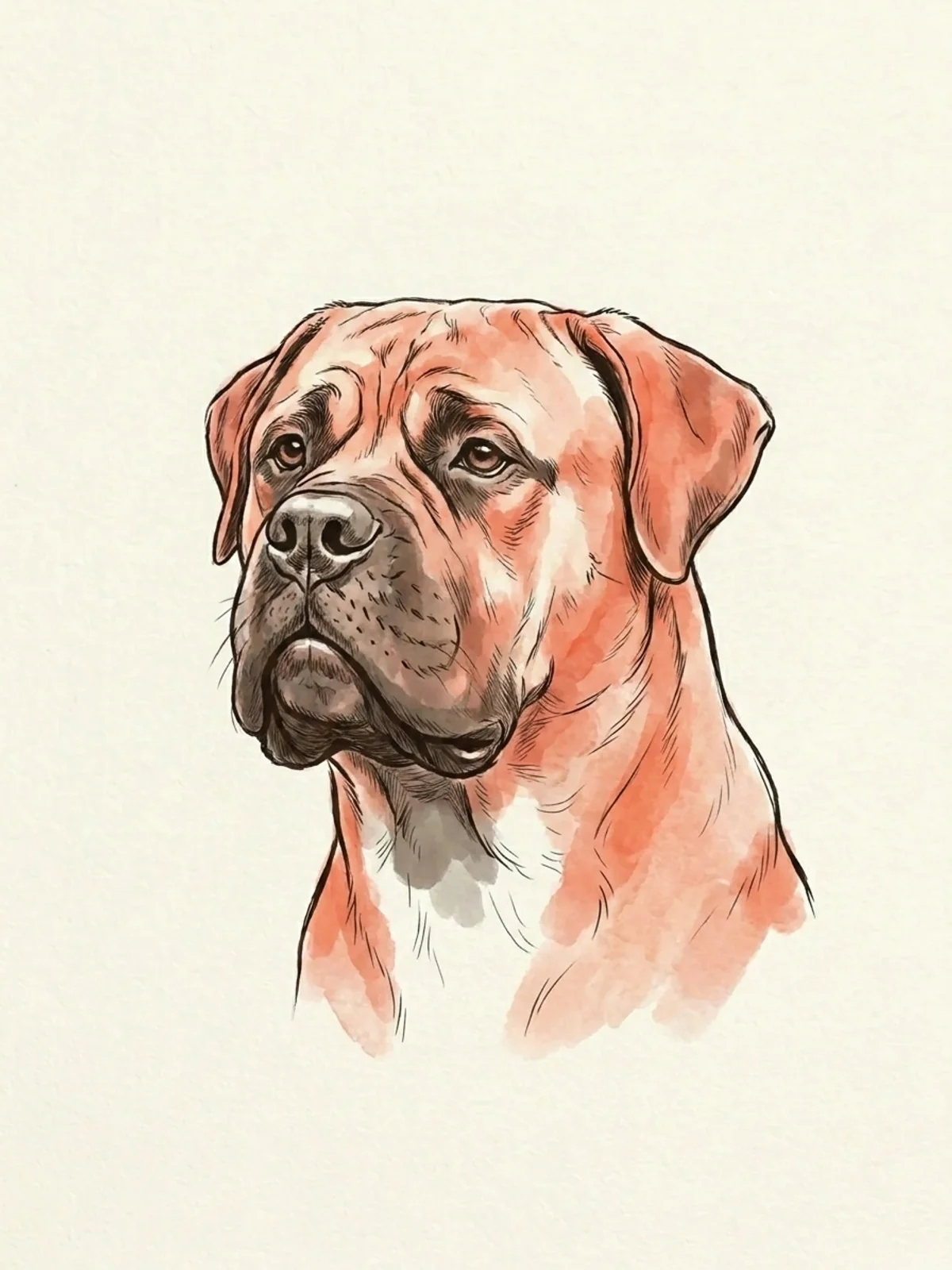
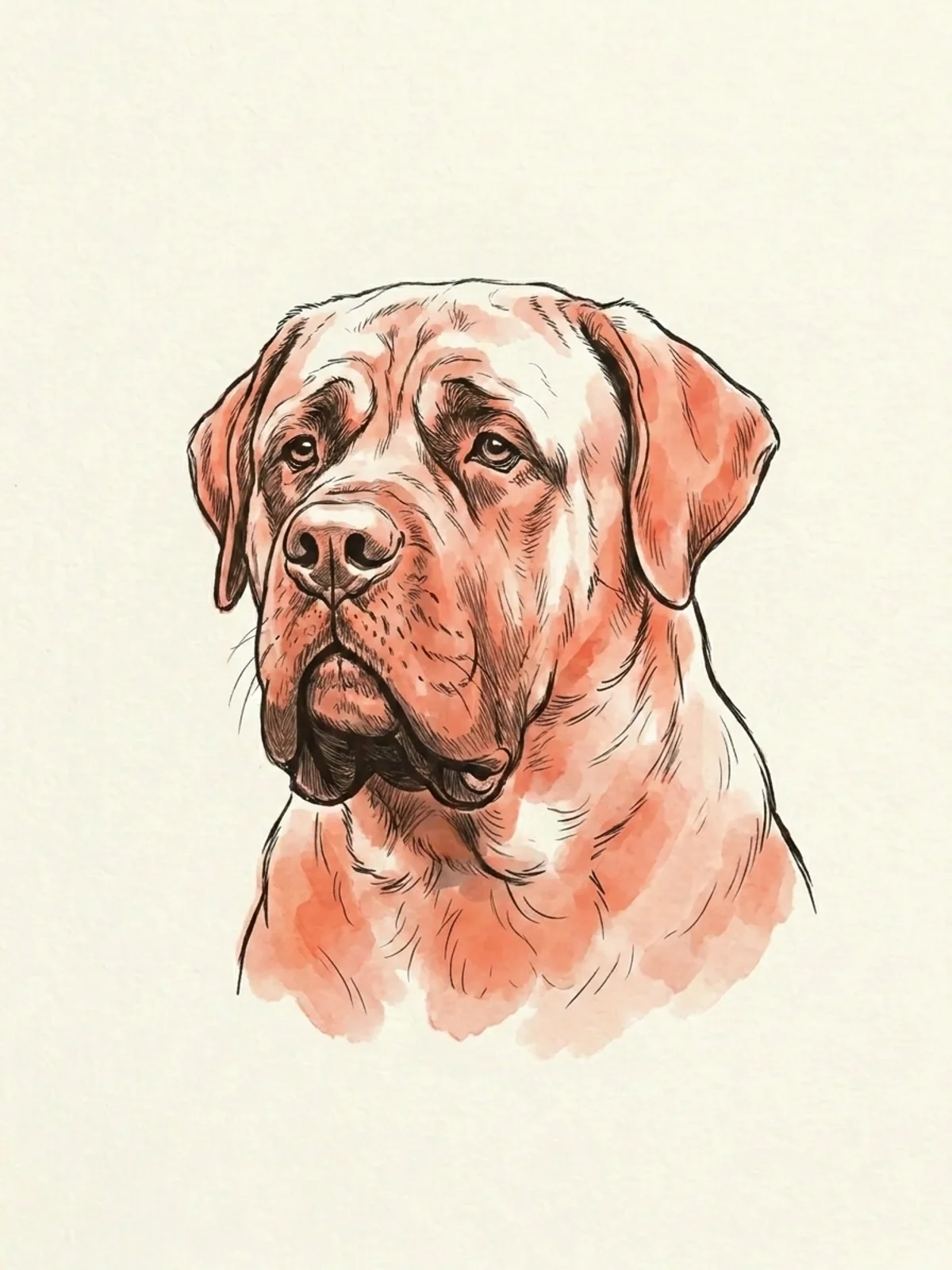
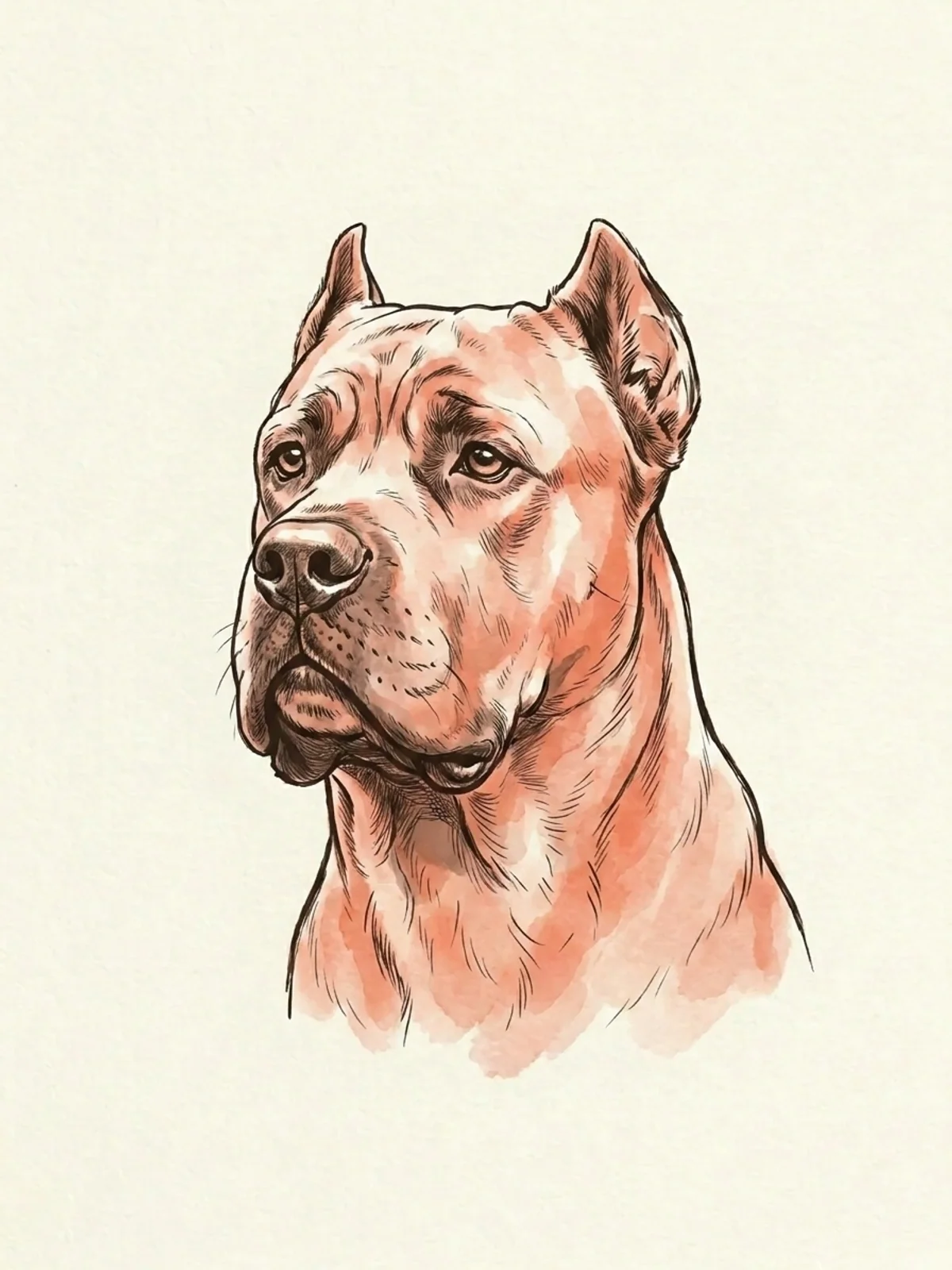
The Bullmastiff lives about 7 to 9 years, one of the shortest ranges of any popular breed. That figure sits well below the all-breed average of roughly 11 years, and it is giant-breed biology talking, not a verdict on how the dog was raised. A breed that carries 45 to 59 kilograms on a frame that finishes growing fast pays for that mass with a shorter clock. Owners who choose a Bullmastiff almost always know this going in, and the ones who keep their dogs longest understand exactly what is coming.
Key facts
- Typical lifespan: 7 to 9 years (American Kennel Club)
- One of the highest breed cancer burdens of any popular breed, with documented lymphoma clusters and elevated mast cell tumour risk (Dobson 2013)
- Bloat (gastric dilatation-volvulus) is a leading emergency; prophylactic gastropexy strongly lowers the risk (American Bullmastiff Association)
- Senior onset: around 5 to 6 years (giant-breed curve)
How long Bullmastiffs actually live
The American Kennel Club Bullmastiff profile puts life expectancy at 7 to 9 years. Eight is a fair median. Ten is a good run. Eleven happens, but it is rare enough to be remarkable, and a Bullmastiff that reaches it is almost always lean and from a line where the breeder can name how long the grandparents lived.
The breed’s history explains the build. English gamekeepers in the late 1800s crossed the Mastiff at roughly 60 percent with the Bulldog at roughly 40 percent to make a fast, silent “night dog” that could track a poacher in the dark, knock him down, and pin him without mauling. The result is the Bullmastiff: enormous, quiet, and tuned for a kind of work that has nothing to do with longevity.
The shape of the range matters more than the midpoint. A 58-kilogram dog and a 46-kilogram dog of the same breed do not live the same number of years. Lean Bullmastiffs at the lower end of the weight range tend to outlast their heavier littermates, and that single fact is the most actionable thing in this article. Size within the breed predicts the timeline the same way size across breeds does.
Cancer is the dominant lifespan factor
If one thing pulls the Bullmastiff average down, it is cancer. The breed sits among the highest cancer burdens of any popular dog, and the pattern is well documented rather than anecdotal. Jane Dobson’s 2013 review, Breed-Predispositions to Cancer in Pedigree Dogs, records that Bullmastiffs fall in the boxer and bulldog group reported to carry elevated risk of mast cell tumours, and it describes a striking lymphoma cluster: nine of 59 Bullmastiffs across three households died of lymphoma over a three-year period, a rate that points to a heritable component rather than chance.
The three cancers that matter most for the breed are lymphoma, mast cell tumours, and osteosarcoma. Lymphoma and mast cell tumours often announce themselves as new lumps or swollen nodes, which is why a monthly hands-on check from nose to tail is worth doing for this breed specifically. Run your hands over the jaw, throat, shoulders, and behind the knees, and get any new lump aspirated rather than watched. Osteosarcoma, the bone cancer that tracks with size and weight, usually shows up as a sudden limp in a middle-aged dog.
The American Bullmastiff Association health page names cancer as the leading non-accidental cause of death in the breed and adds a warning worth repeating: Bullmastiffs have an unusually high pain tolerance and tend not to complain. A dog that hides discomfort is a dog whose disease gets found late, so the burden of early detection sits with the owner, not the dog.
Bloat, joints, and heat
After cancer, bloat is the emergency most likely to end a Bullmastiff’s life early. Gastric dilatation-volvulus happens when the deep, narrow chest lets the stomach fill with gas and twist on itself, cutting off its own blood supply. The dog has hours, not days. The American Bullmastiff Association calls it a life-threatening disorder that needs emergency surgery, and the standard preventive is a prophylactic gastropexy, a procedure that tacks the stomach to the body wall and effectively removes the twist that does the killing. Most surgeons add it during spay or neuter, while the abdomen is already open, and for a deep-chested giant it is the gastropexy you do not want to skip.
Hip and elbow dysplasia round out the orthopaedic picture. Any dog routinely above 45 kilograms loads its joints harder than the structures were built to handle over a full life, and the contributing factor an owner actually controls is puppyhood growth. A large-breed puppy formula with controlled calcium, fed by measured weight rather than free-choice through the first 18 to 24 months, produces slower, sounder growth and a much better chance of reaching eight without a joint surgery.
Heat is the quieter risk. The Bulldog ancestry leaves the Bullmastiff moderately brachycephalic, with a shortened muzzle that does not cool incoming air well. Pair that with a heavy body and a Bullmastiff overheats in conditions a Labrador would shrug off. Keep hard exercise for the cool parts of the day, and treat heavy panting on a warm afternoon as a reason to stop, not push on.
What actually extends a Bullmastiff’s life
A handful of decisions change the odds, and the general principles of extending a dog’s lifespan apply on top with extra weight on early cancer detection and leanness.
Schedule a prophylactic gastropexy at spay or neuter. For a deep-chested giant, this is the single most effective surgical decision available, and declining it is the choice that needs justifying.
Keep the dog lean for life. Body condition score 4 on the 9-point scale, ribs palpable under a thin layer, a visible waist from above. Lean Bullmastiffs outlast heavy ones, and leanness also takes load off joints that are already working overtime.
Check for lumps every month and act fast on what you find. Given the breed’s cancer burden and its stoic streak, early detection is the difference an owner can make. A lump aspirated at two weeks beats the same lump found at two months.
Feed a controlled large-breed puppy diet through the first two years, and screen the heart, since the breed also carries some cardiac risk. Slow growth catches the joint problems early.
The Bullmastiff was built to be huge and silent, and both of those traits cost something at the end. What careful ownership buys is the right end of the range, away from the emergencies and the late-found cancers that pull the average down. Compared with the other breeds at the short end of the table, the Bullmastiff’s story is unusually about cancer, and that is the one to stay ahead of.
See your Bullmastiff’s real age with the calculator, which uses the giant breed curve to give you a number that is actually true for your dog.