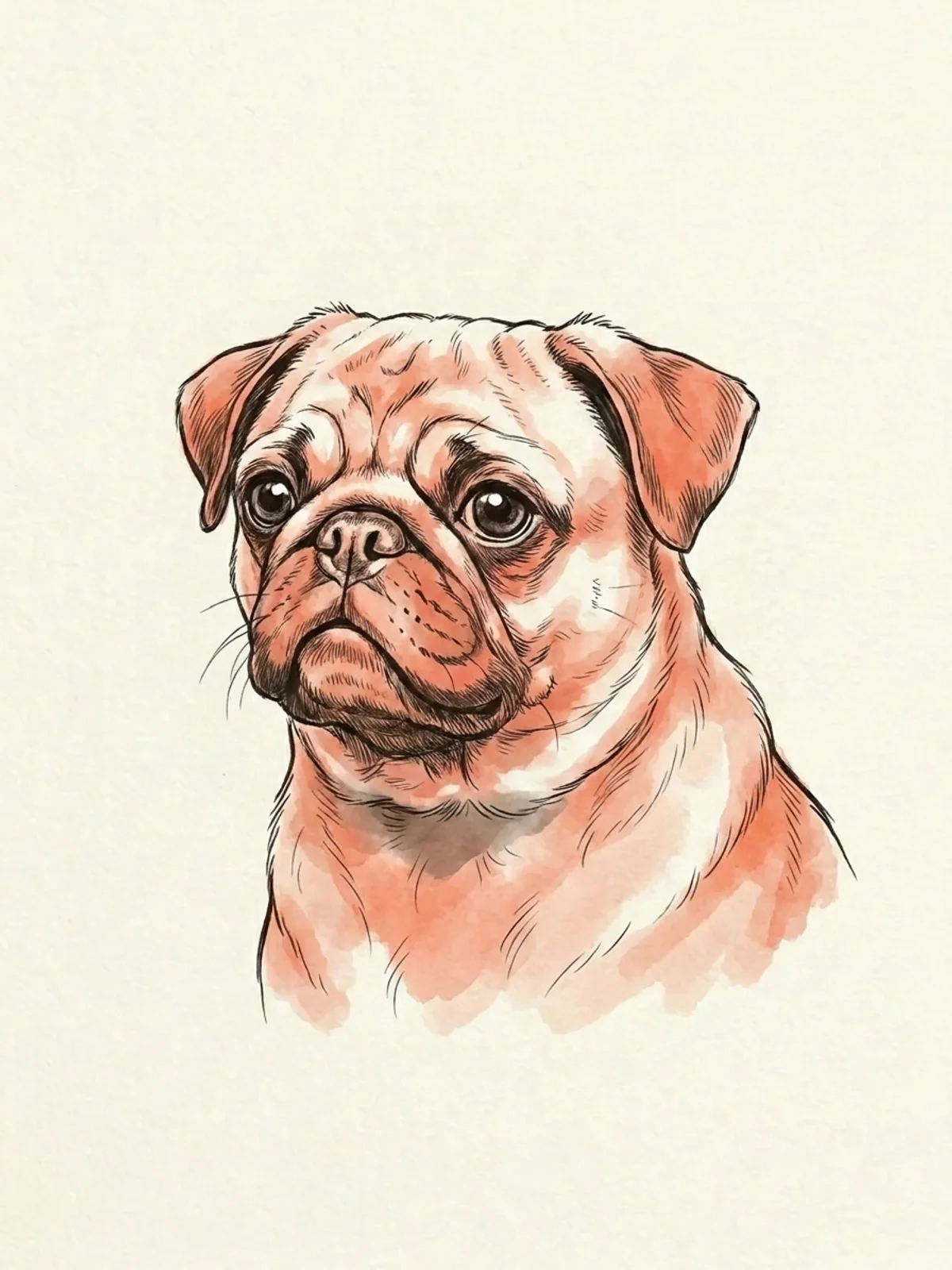
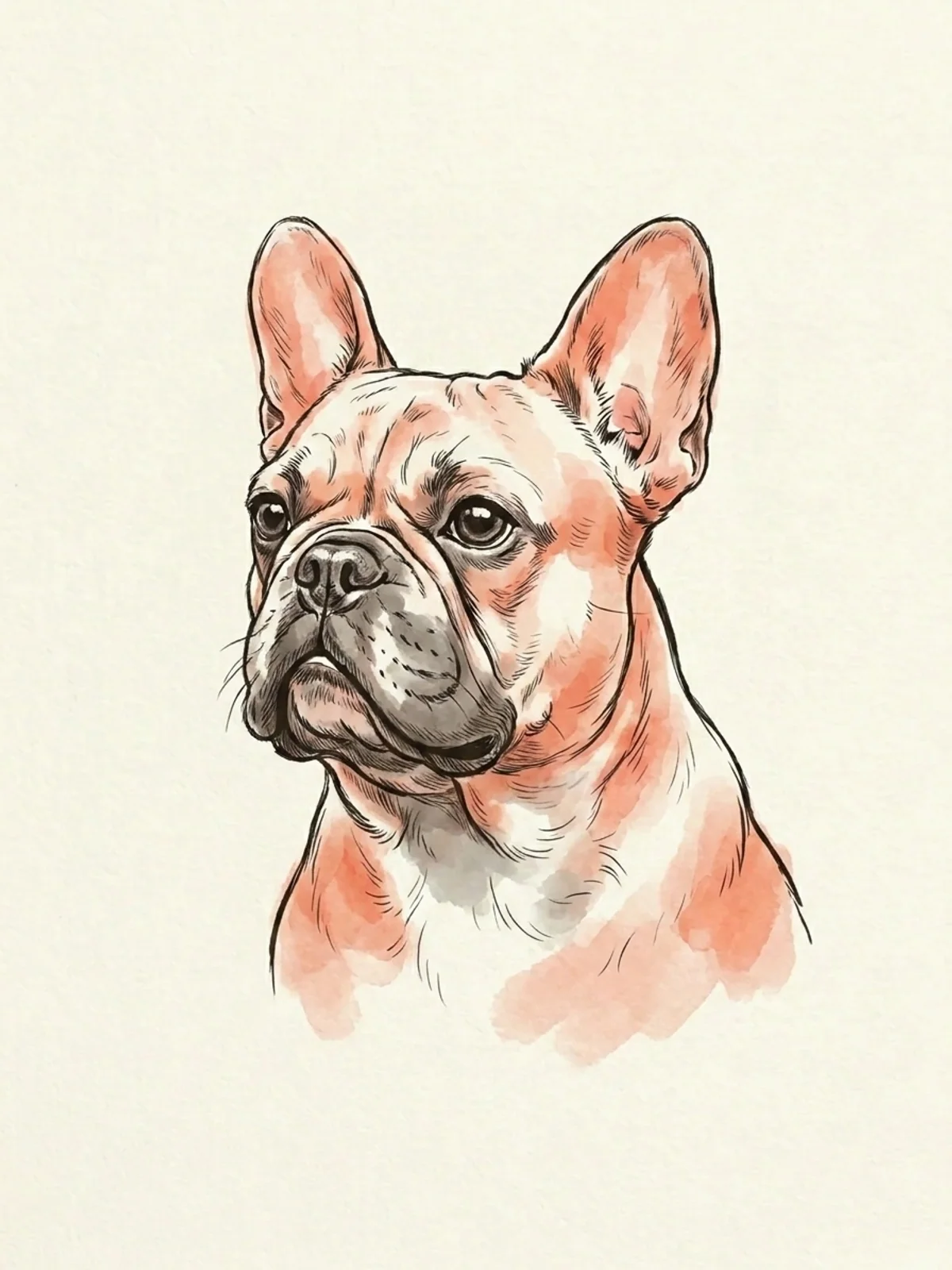
Pugs typically live 13 to 15 years, comfortably above the all-breed average of about 11 years. That is a respectable run for any small breed, and a surprising one for a dog with such a compressed skull. Among brachycephalic breeds, Pugs outlast French Bulldogs by roughly four years on average, despite a similar facial silhouette. The breed is also one of the oldest in the world, with roots in Chinese imperial courts about 2,000 years ago. Two millennia of selection for companionship, plus a body that is small but not extreme in most other dimensions, gives the Pug a real shot at the upper end of that range.
Key facts
- Typical lifespan: 13 to 15 years (American Kennel Club), about four years longer than French Bulldogs
- Top causes of death: BOAS airway syndrome (8.2%), seizures (6.7%), degenerative spinal disorder (4.7%) (2025 Australian study)
- Pug-specific risk: Pug Dog Encephalitis (PDE); two risk-haplotype copies raise odds 12.75x (UC Davis)
- Eye injuries common due to shallow, forward-set eye sockets
How long Pugs actually live
The AKC Pug breed profile lists 13 to 15 years, which lines up with what veterinary clinics and breed clubs consistently report. A Pug reaching 14 is unremarkable. Reaching 16 happens, especially in lean dogs from healthier lines.
The most rigorous breed-specific data comes from the Royal Veterinary College’s VetCompass programme. Their 2022 study, Health of Pug dogs in the UK, compared 4,308 Pugs against 21,835 non-Pugs and found that the Pug population skews young, with a wide spread of diagnosed disorders. The headline finding was that Pugs can no longer be considered a “typical dog” from a health perspective, even though many still reach the 13-to-15 window.
An Australian primary-care study published in 2025, Demography and Causes of Mortality of Pugs, reported that the top causes of death were Brachycephalic Obstructive Airway Syndrome (8.2 percent), seizures (6.7 percent), and degenerative spinal cord disorder (4.7 percent). The numbers say something useful: the breed has real problems, but those problems are concentrated in identifiable categories rather than spread across every system at once.
Why brachycephalic anatomy matters less in Pugs than in Frenchies
Pugs and French Bulldogs share the same broad face shape, yet their average lifespans sit four years apart. Frenchies cluster at 9 to 11 years. Pugs sit at 13 to 15. The gap is not an accident of branding. It reflects body plan.
A Frenchie carries the brachycephalic head on a stocky, muscle-heavy frame with a chondrodystrophic spine, predisposing the breed to severe intervertebral disc disease. A Pug carries a similar head on a lighter, more proportionate body with a less extreme spine. The airway problem is real in both breeds, but the secondary load is different. Pugs are also less likely to have the extreme stenotic nostrils and oversized soft palate seen in modern show-line Frenchies, though the variation across Pug lines is wide.
Recent breeding efforts make the contrast sharper. The “retro Pug” and the German “Otto” line cross Pugs with Parson Russell Terriers or Jack Russells to recover a functional muzzle and more open nostrils. Dogs from these lines breathe more efficiently, tolerate heat better, and based on early breeder reports tend to age more like typical small dogs than like classic brachycephalics. The breed is not stuck. Where breeders select toward function, lifespan responds.
None of this makes the Pug airway healthy. It just means a 13-to-15-year average is consistent with a dog whose breathing is compromised but not catastrophically so.
What shortens a Pug’s life
Three breed-specific risks account for most early deaths.
Pug Dog Encephalitis (PDE), also called necrotizing meningoencephalitis, is a fatal inflammatory brain disease almost unique to Pugs. The UC Davis Veterinary Genetics Laboratory PDE test shows that dogs with two copies of the risk haplotype on chromosome 12 are 12.75 times more likely to develop the disease, which usually appears between 6 months and 7 years of age. Signs include seizures, circling, blindness, and rapid neurological decline. There is no cure. The condition is rare in absolute terms, but it skews young, killing affected dogs before they ever reach senior years.
Eye injuries are common because Pug eyes sit shallow in the socket and project forward. A scratch from a low branch or a rough greeting from another dog can cause a corneal ulcer that worsens quickly. Untreated ulcers can rupture the eye. Daily eye checks and prompt veterinary attention for any squinting, cloudiness, or discharge are not optional for this breed.
Obesity does the slowest, quietest damage. A Pug at 9 or 10 kilograms instead of 7 or 8 carries that extra mass on an already strained airway and a spine that is not built for the load. Joint disease, heat intolerance, and breathing distress all worsen together. The middle-aged Pug who looks “well fed” to a relative is, in clinical terms, dropping years off the back end of the curve.
What lengthens a Pug’s life
Beyond the breed-specific concerns above, the general principles of extending a dog’s lifespan apply to Pugs too. Choose the dog carefully. Visibly open nostrils, a snout that protrudes at least slightly past the eyes, and parents with documented health screening are the practical markers. Ask whether the breeder has tested the parents for the PDE susceptibility haplotype. Reputable breeders will know what you mean.
Manage heat and exertion. Pugs cannot pant efficiently, so they cannot cool themselves the way most dogs can. Exercise in temperatures above roughly 22 degrees Celsius (72 Fahrenheit) is a real risk, and heatstroke kills Pugs faster than owners expect. Short walks, early morning or evening in summer, and a hard rule against leaving the dog in a warm car will protect more years than any supplement.
Keep the weight down and the teeth clean. Body condition score 4 of 9 is the target, with ribs easily felt and a visible waist from above. Dental disease in small flat-faced breeds drives systemic inflammation and shortens life independently of any other factor, so brushing several times a week and annual cleanings matter more than most owners assume.
The Pugs that reach 15 or 16 share an unromantic pattern: lean bodies, attentive owners who noticed eye and breathing problems early, and genetics that avoided the PDE coin flip. The breed rewards consistency.
See your Pug’s real age with the calculator, which uses the small breed curve to give you a number that is actually true for your dog.